
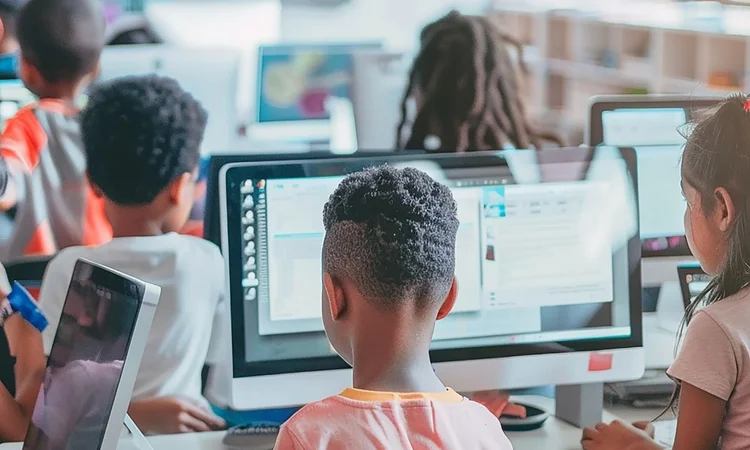
How U.S. Schools Are Assessing Digital Literacy Skills?

Lisa Martinez
Lisa Martinez

In today’s hyper-connected world, digital literacy has become as essential as reading, writing, and arithmetic. For schools across the United States, teaching digital literacy is no longer optional; it is foundational. But the bigger question now facing educators, policymakers, and business leaders alike is this: how do we assess digital literacy in meaningful, scalable ways?

Why Digital Literacy Assessment Matters?

Digital literacy is more than knowing how to use a computer or browse the internet. It encompasses a range of competencies, from evaluating online sources to understanding data privacy, cybersecurity, digital communication, and even the ethical use of artificial intelligence. In the U.S., where the workforce is rapidly digitizing, assessing digital literacy early equips students with essential skills for the modern economy.

According to a 2023 report from the National Center for Education Statistics, over 75% of public schools identified digital literacy as a key learning goal. However, only 38% reported having a clear framework for evaluating it. This gap reveals the urgent need for systematic assessments that are both robust and equitable.

The Tools of Assessment: What Schools Are Using

Many school districts are integrating dedicated digital literacy assessment platforms, such as Common Sense Education’s Digital Citizenship curriculum and the International Society for Technology in Education (ISTE) standards. These tools provide grade-level rubrics and performance-based evaluations that assess students' abilities to responsibly use digital tools, think critically about online content, and collaborate through digital platforms.

Other schools are embedding digital literacy assessment into broader classroom activities. For instance, instead of giving students standalone digital tests, teachers evaluate how well students source credible articles for a research paper, or how they manage a group presentation using collaborative digital tools like Google Workspace or Canva.

State-Level Initiatives and Standardization

States like California, New York, and Texas are leading the way in integrating digital literacy assessment into their academic standards. California’s Digital Learning Integration Framework, launched in 2022, offers schools a roadmap for measuring digital literacy alongside traditional academic performance. Similarly, New York’s Digital Fluency Learning Standards outline grade-wise benchmarks in areas such as digital content creation and cybersecurity awareness.

However, challenges persist in standardizing these assessments across districts with vastly different technological infrastructures and funding capabilities. What a well-funded suburban school can do with a 1:1 laptop program may be drastically different from what a rural district with limited bandwidth can achieve.

Public-Private Collaborations: Building Stronger Ecosystems

Recognizing the scale of the challenge, several tech companies and nonprofits have stepped in to support digital literacy assessments in schools. Microsoft’s Digital Skills initiative and Google’s Applied Digital Skills curriculum offer free resources that schools can use to both teach and assess digital literacy. These platforms include interactive lessons, real-world projects, and scenario-based evaluations that go beyond traditional testing.

Such collaborations also help align classroom instruction with real-world workplace expectations, ensuring students aren't just tech-savvy but workplace-ready. Business leaders across industries are increasingly recognizing that digital literacy is no longer an IT department skill—it’s a baseline requirement for every role.

Data-Driven Insights: The Role of EdTech Analytics

With the rise of educational technology platforms, many schools are now collecting data to gain insights into how well students are mastering digital literacy. Learning Management Systems (LMS) such as Canvas or Schoology provide real-time analytics on student engagement, resource usage, and digital collaboration. These insights help educators adjust instructional strategies and personalize learning pathways.

Additionally, schools are using formative assessments—short, frequent evaluations—to track students' progress. For example, after a module on online privacy, students may complete a digital portfolio or a reflection journal to demonstrate their understanding.

Equity in Assessment: Bridging the Digital Divide

While digital literacy is essential, it is also a privilege not all students equally enjoy. Assessment strategies must account for disparities in access to devices, internet connectivity, and digital learning environments. Many districts are now focusing on equitable assessments that consider both access and context.

Some schools are adopting hybrid models of assessment—combining digital tasks with oral presentations, peer reviews, and project-based learning—to ensure students without strong tech access at home are not penalized.

Preparing Educators for Digital Assessment

Another key aspect of effectively assessing digital literacy is preparing educators. Teachers themselves must be digitally literate to model behaviors, evaluate performance, and leverage the right tools. Districts across the U.S. are now investing in professional development programs focused on digital pedagogy and assessment literacy.

Organizations like ISTE and the Consortium for School Networking (CoSN) offer certification programs and workshops that help teachers align their instruction with 21st-century learning goals.

The Business Impact of Digital Literacy in Education

Why should business leaders and startup founders care about how schools assess digital literacy? Because today’s students are tomorrow’s workforce. Companies seeking to stay competitive in the digital economy need employees who can think critically, communicate effectively, and collaborate in digital environments.

Firms that support education systems in building digital competency pipelines are not just fulfilling CSR obligations, they're investing in their future talent pool. Furthermore, as more companies participate in shaping curriculum and assessments, there’s a stronger alignment between educational outcomes and industry needs.

Looking Ahead: A Smarter Framework for the Future

The future of digital literacy assessment lies in smart integration—seamlessly embedding evaluation into everyday learning rather than isolating it as a separate subject. Innovations like adaptive learning technologies, AI-based tutors, and immersive simulations (AR/VR) will likely redefine how we measure digital competency in the coming decade.

For the U.S. education system to remain globally competitive, these advancements must be paired with policy support, equitable access, and industry collaboration. Digital literacy is not a passing trend; it's a foundational skill that will define the success of future generations.

Conclusion: 

As we move further into the digital era, assessing digital literacy becomes not just an educational necessity but a societal imperative. U.S. schools are rising to the challenge with a mix of innovation, collaboration, and data-driven insight. For business leaders, the message is clear: engage now, shape the future, and help build a generation that is not just digitally connected but digitally competent.

About the Author

Lisa Martinez
Lisa Martinez

As a writer, Lisa Martinez covers organizational leadership and workplace culture with an eye for management effectiveness. They work through leadership research and organizational behavior studies to make complex topics actionable. They focus on how management practices affect employee performance, satisfaction, and retention. Their reporting highlights the difference between leadership theory and frontline management reality. They frequently examine how companies build high-performing teams and sustain organizational culture during growth. They are known for evaluating management frameworks and leadership development programs. Their perspective is shaped by conversations with executives, HR professionals, and organizational psychologists. They write about communication skills, feedback systems, and decision-making processes. They emphasize people-centric leadership and psychological safety. Their work helps managers at all levels improve their leadership effectiveness.

Comments

Join the discussion and share your thoughts.

No comments yet. Be the first to comment.

Leave a Reply

Your email address will not be published.

Related Posts

Challenges and Opportunities in Scaling Adaptive Learning Technologies Globally

Challenges and Opportunities in Scaling Adaptive Learning Technologies Globally

Adaptive learning technologies are revolutionizing education and workforce training, offering a personalized approach to learning that adapts to individual needs. By leveraging artificial intelligence (AI) and machine learning, these technologies promise to transform how we acquire knowledge, improve skills, and address learning gaps. However, scaling these solutions on a global scale presents both significant challenges and exciting opportunities.

Posted on: by Rachel Kim
Accessible Education: Strategies for Supporting Students with Disabilities

Accessible Education: Strategies for Supporting Students with Disabilities

In an ideal educational system, every student is provided with the tools and resources they need to succeed, regardless of their challenges or disabilities. However, ensuring accessibility for students with disabilities remains a significant challenge in many educational institutions. Creating an inclusive learning environment requires not only compliance with regulations but also a shift in mindset, recognizing that every student deserves the opportunity to learn and thrive. In this article, we

Posted on: by David Park
How Cognitive Load Management Is Shaping Modern Education

How Cognitive Load Management Is Shaping Modern Education

In the rapidly evolving world of education, educators are constantly seeking new ways to improve learning outcomes. One of the key strategies gaining traction is cognitive load management. This concept revolves around optimizing how information is presented and processed in order to prevent cognitive overload, allowing learners to absorb and retain information more effectively. By integrating cognitive load management techniques into instructional design, modern education can be transformed to m

Education
A New Era of Learning: How Adaptive Education is Setting Students Up for Success

A New Era of Learning: How Adaptive Education is Setting Students Up for Success

In the rapidly evolving world of education, traditional one-size-fits-all approaches are being replaced with more personalized learning experiences. Adaptive education, powered by technology, is transforming the classroom by tailoring learning to each student's needs, strengths, and weaknesses. This innovative approach not only enhances the learning process but also ensures that students are set up for long-term success in both academic and real-world environments.

Education
The Intersection of Culture and Learning: Fostering a Holistic Education

The Intersection of Culture and Learning: Fostering a Holistic Education

In an increasingly interconnected world, education is no longer just about imparting knowledge. It’s about developing well-rounded individuals who understand and respect the diversity of cultures, beliefs, and perspectives that shape the world around them. The intersection of culture and learning plays a critical role in fostering a holistic education that prepares students for both personal success and global citizenship. In this article, we will explore how cultural awareness enhances the lear

Education
Unlocking Opportunities: How Micro-Credentials Are Reshaping Education

Unlocking Opportunities: How Micro-Credentials Are Reshaping Education

The traditional education system has long been the primary route for individuals to gain skills and qualifications. However, as the demand for practical, up-to-date knowledge continues to grow, there has been a shift towards more flexible and accessible forms of learning. One such innovation is micro-credentials . These small, focused qualifications are changing the way we think about education, offering a new way to gain specialized skills quickly and affordably.

Education
Creating Effective Hybrid Learning Environments: Strategies for Educators

Creating Effective Hybrid Learning Environments: Strategies for Educators

The evolution of education has seen a significant shift toward hybrid learning environments—combining traditional face-to-face instruction with online learning components. This model emerged out of necessity during the COVID-19 pandemic and has since proven to enhance educational accessibility and flexibility. However, creating an effective hybrid learning environment poses unique challenges for educators. This article explores key strategies to optimize hybrid learning experiences for students.

Education
EdTech Solutions for Remote Learning: Bridging the Gap in Education

EdTech Solutions for Remote Learning: Bridging the Gap in Education

The global shift to remote learning, accelerated by the COVID-19 pandemic, has highlighted both the challenges and opportunities presented by technology in education. As educators, students, and parents navigated this new landscape, the role of educational technology (EdTech) emerged as a pivotal factor in facilitating effective learning experiences. This article explores various EdTech solutions that bridge the gap in education, enabling equitable access to knowledge, fostering engagement, and

Education
Future of Education: Trends Shaping Online Learning Platforms in 2025

Future of Education: Trends Shaping Online Learning Platforms in 2025

The landscape of education is evolving at an unprecedented pace, especially in the wake of the global pandemic that accelerated the adoption of online learning. As we look toward 2025, several key trends are emerging that will shape the future of online learning platforms. This article explores these trends and how they are expected to influence educational practices, student experiences, and the overall effectiveness of online education.

Education
From Theory to Practice: The Benefits of Skill-Based Education

From Theory to Practice: The Benefits of Skill-Based Education

The traditional approach to education, largely centered around theoretical knowledge and academic instruction, is gradually evolving to meet the demands of the modern workforce. Today, employers are seeking individuals who can apply their knowledge to real-world scenarios, emphasizing the importance of practical skills. Skill-based education, which focuses on hands-on learning and competency development, is gaining momentum as a transformative model for both students and professionals. In this a

Education