

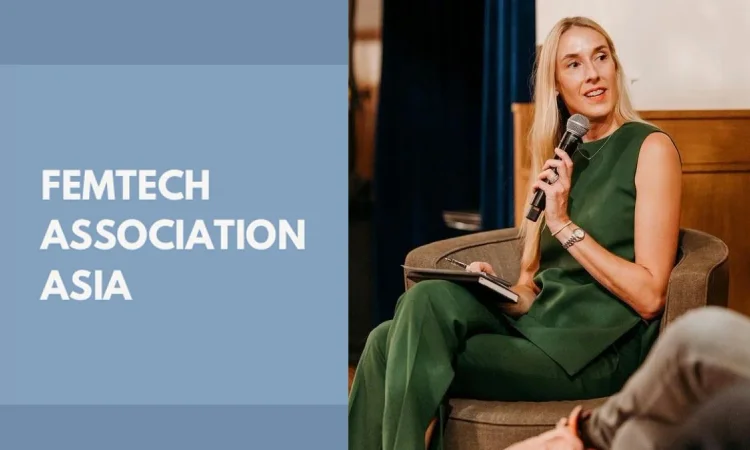
For decades, women’s health lived in the shadows of global innovation. Underfunded, under-researched, and often misunderstood, it was treated as a niche rather than a necessity. Today, that narrative is being dismantled, especially across Asia, where demographic scale, cultural diversity, and digital acceleration intersect in powerful ways. At the heart of this transformation stands FemTech Association Asia, a movement-driven ecosystem shaping how women’s health innovation is built, funded, and scaled across one of the world’s most complex regions.
FemTech Association Asia is not simply a network; it is a catalyst. A platform where founders, clinicians, investors, researchers, policymakers, and advocates converge to redefine how women experience healthcare throughout their lives. From menstruation and fertility to mental health, chronic conditions, and longevity, the association reflects a new reality: women’s health is not vertical; it is an economic, social, and technological force.
Asia’s Unique FemTech Moment
Asia represents both the greatest challenge and the greatest opportunity for women’s health innovation. Home to more than half the world’s female population, the region spans vastly different healthcare systems, income levels, regulatory frameworks, and cultural norms. What unites these markets is a rising demand for accessible, dignified, and data-driven healthcare solutions for women.
Historically, many Asian societies have treated women’s health topics, menstruation, reproductive health, menopause, and sexual wellness as private or even taboo. This cultural silence limited not only care-seeking behavior but also product development, clinical research, and investment. FemTech Association Asia emerged to confront this gap head-on, creating safe, credible, and scalable pathways for innovation that respect cultural context while challenging outdated norms.
Crucially, Asia’s rapid digital adoption has accelerated this shift. Mobile health platforms, telemedicine, AI diagnostics, and wearable technologies are enabling women to access care discreetly, affordably, and on their own terms. FemTech Association Asia operates at this intersection of culture, technology, and care, turning systemic barriers into innovation opportunities.
Building an Ecosystem, Not Just a Category

Unlike traditional industry associations, FemTech Association Asia is ecosystem-first by design. Its mission extends beyond visibility or advocacy; it focuses on infrastructure. The association actively supports early-stage founders, scale-ups, and enterprise innovators by connecting them with the resources needed to grow responsibly and sustainably.
This includes access to cross-border mentorship and peer networks, strategic partnerships with healthcare providers and corporates, investor education and capital matchmaking, research collaboration and clinical validation pathways, and thought leadership and policy dialogue.
By nurturing collaboration rather than competition, FemTech Association Asia helps avoid one of the industry’s biggest pitfalls: fragmented innovation that fails to scale or deliver real-world impact. Instead, the ecosystem encourages solutions that are evidence-based, inclusive, and adaptable across diverse Asian markets.
Empowering Women Founders as System Architects
Women founders sit at the core of FemTech Association Asia’s philosophy, not as symbolic figures, but as system architects. Across Asia, women entrepreneurs are building solutions informed by lived experience, cultural nuance, and unmet needs that traditional healthcare models have overlooked.
Yet women-led startups globally receive only a fraction of venture funding, and FemTech companies face additional skepticism due to lingering biases around women’s health markets. FemTech Association Asia actively works to close this gap by reframing the narrative, from “niche” to “necessary,” from “emotional” to “evidence-driven,” and from “small market” to “massive economic opportunity.”
Through pitch platforms, investor roundtables, and ecosystem storytelling, the association equips founders with more than exposure. It provides them with language, data, and strategic positioning to engage serious capital. In doing so, it strengthens not just individual companies but the credibility of the entire FemTech sector.
Redefining Healthcare Through Technology and Trust

Technology alone does not solve healthcare challenges; trust does. FemTech Association Asia recognizes that women adopt health solutions when they feel understood, respected, and safe. This insight shapes how innovation is guided within the ecosystem.
From AI-powered fertility tracking to mental health platforms tailored for postpartum women, successful FemTech solutions combine precision with empathy. Data privacy, clinical validation, and ethical AI are not afterthoughts; they are foundational principles. The association champions responsible innovation, ensuring that rapid growth does not come at the expense of women’s autonomy or well-being.
In a region where healthcare access varies widely, this approach is especially critical. FemTech Association Asia supports hybrid models that blend digital convenience with clinical oversight, making advanced care accessible even in underserved and emerging communities.
Shifting Capital Toward Impact and Inclusion
One of the association’s most strategic roles lies in reshaping how investors view women’s health. For years, capital allocation failed to reflect women’s disproportionate healthcare needs or spending power. FemTech Association Asia addresses this imbalance by educating investors on market size, lifecycle economics, and long-term return on investment tied directly to women’s health outcomes.
The association positions FemTech not merely as a social good but as a resilient investment thesis, one aligned with demographic shifts, preventive healthcare trends, and digital health scalability. By facilitating meaningful dialogue between founders and forward-thinking investors, it accelerates smarter capital flow into solutions that generate both financial and societal returns.
This shift matters. When capital aligns with care, innovation becomes sustainable, and women benefit at every stage of life.
Policy, Research, and the Power of Collective Voice
Beyond startups and funding, the FemTech Association Asia plays a critical role in policy and research advocacy. Women’s health innovation often outpaces regulation, creating friction between technological possibility and clinical or legal practice. The association helps bridge this gap by fostering informed conversations among regulators, clinicians, researchers, and entrepreneurs.
By amplifying evidence-based insights and regional perspectives, FemTech Association Asia contributes to more inclusive healthcare policies, ones that recognize gender-specific needs in clinical trials, digital health standards, insurance frameworks, and public health strategies. This collective voice ensures that women’s health innovation is not sidelined, but integrated into mainstream healthcare planning.
The Road Ahead: From Awareness to Infrastructure
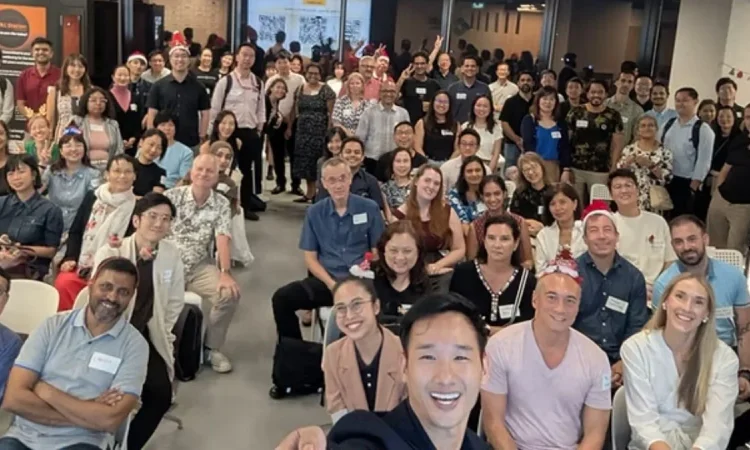
As FemTech matures, the conversation is shifting, from awareness to infrastructure, from pilot projects to scalable platforms, and from isolated success stories to systemic change. FemTech Association Asia is uniquely positioned to lead this next phase of evolution.
The future it envisions is one where women’s health data is representative, ethical, and actionable; care models are preventative, personalized, and continuous; innovation reflects cultural diversity without compromising medical quality; and women are decision-makers across healthcare, technology, and capital.
This is not a distant ambition. It is already unfolding through the association’s growing influence, partnerships, and regional leadership.
Why the FemTech Association Asia Matters Now
In a world grappling with aging populations, mental health crises, rising healthcare costs, and widening access gaps, women’s health is no longer optional; it is foundational. Asia’s scale ensures that solutions developed here will influence global standards, markets, and care models for decades to come.
FemTech Association Asia stands as proof that when ecosystems are built with intention, inclusion, and integrity, innovation becomes transformative. It is not just supporting the future of women’s health; it is actively designing it.
As more founders, investors, clinicians, policymakers, and global leaders join this movement, one truth becomes increasingly clear: the future of healthcare in Asia, and beyond, will be shaped by how well we listen to women, invest in their wellbeing, and innovate with purpose.









Leave a Reply
Your email address will not be published.