


Not All Sadness Is the Same
We all experience sadness, disappointment, and emotional lows at some point in life. Whether it's due to a breakup, job loss, or a major life change, feeling down is part of being human. But what happens when sadness doesn't fade, when it becomes persistent, pervasive, and begins to interfere with daily functioning?
In today's mental health-aware society, the terms "clinical depression" and "situational depression" are often used, but not always understood. They both involve deep emotional pain, but their causes, symptoms, treatment approaches, and long-term outlooks differ significantly.
This article explores Clinical vs Situational Depression, what sets them apart, how they overlap, and why understanding the distinction can make all the difference in getting proper support and healing.
What Is Depression?
At its core, depression is a mood disorder characterized by persistent sadness, loss of interest or pleasure in activities, changes in appetite or sleep, fatigue, and difficulty concentrating. In severe cases, it can lead to feelings of hopelessness, worthlessness, or suicidal thoughts.
But depression is not one-size-fits-all. It's a spectrum, and understanding where you or someone you love falls on it can help guide effective treatment and recovery.
Defining the Two Types: Clinical vs Situational Depression

Clinical Depression (Major Depressive Disorder)
Clinical depression, also called Major Depressive Disorder (MDD), is a diagnosable medical condition. It's not necessarily tied to an external event or trigger; it can occur even when life seems "fine" on the surface. It involves biological, genetic, and chemical factors in the brain.
The DSM-5 (Diagnostic and Statistical Manual of Mental Disorders) defines clinical depression as experiencing five or more specific symptoms (such as depressed mood, lack of interest, fatigue, etc.) for at least two weeks, causing significant impairment.
Situational Depression (Adjustment Disorder with Depressed Mood)
Situational depression, on the other hand, is a short-term, stress-related form of depression that occurs in response to a specific event or situation. Think of it as the mind’s natural, albeit painful, reaction to difficult life changes or trauma.
It’s often referred to as Adjustment Disorder with Depressed Mood, and while it shares some symptoms with MDD, it typically resolves once the situation improves or the individual adapts.
Key Differences at a Glance
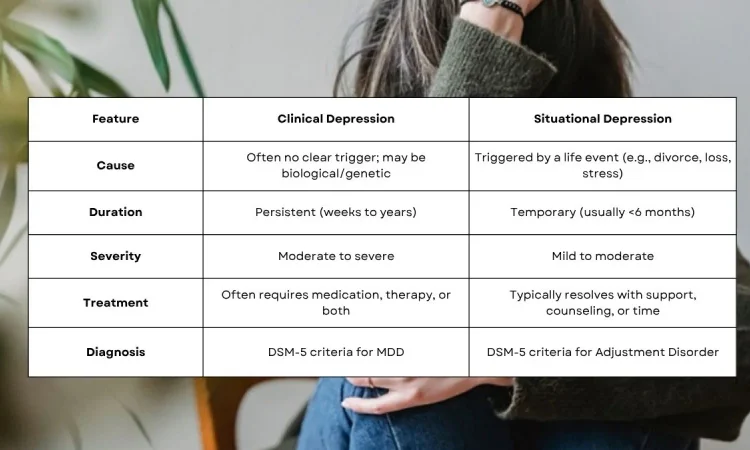
Signs and Symptoms: Where They Overlap and Diverge
Common Symptoms Shared by Both:
Sadness, crying spells
Loss of interest in activities
Sleep disturbances
Fatigue or low energy
Changes in appetite
Difficulty concentrating
Feelings of hopelessness
Symptoms Leaning Toward Clinical Depression:
Suicidal thoughts or behaviors
Physical symptoms like chronic pain or slow movement
Anhedonia (inability to feel pleasure)
Feelings of worthlessness unrelated to current circumstances
Symptoms lasting longer than 6 months
Symptoms Indicative of Situational Depression:
Clear connection to a triggering event
Improvement as circumstances change
Less impact on long-term daily functioning
Common Triggers of Situational Depression

Situational depression often stems from significant life changes, including:
Death of a loved one
Divorce or breakup
Loss of job or financial crisis
Serious illness or injury
Moving to a new city or country
Retirement or empty nest
Natural disasters or traumatic events
While these events might not affect everyone the same way, they can profoundly disrupt emotional equilibrium in some individuals, especially without strong support systems.
Clinical Depression: The Role of Brain Chemistry
Clinical depression isn’t just “in your head”; it’s often in your neurochemistry.
Research shows that people with clinical depression may have imbalances in neurotransmitters such as serotonin, dopamine, and norepinephrine, all of which regulate mood, motivation, and reward systems.
Other contributing factors include:
Genetics (family history of depression)
Hormonal imbalances (e.g., thyroid, cortisol)
Chronic stress or inflammation
Personality traits like low self-esteem or pessimism
Trauma history, especially early in life
That’s why someone with clinical depression may still feel hopeless even when everything seems to be going well in their life; the cause is often internal.
When Situational Becomes Clinical
Sometimes, what begins as situational depression can evolve into clinical depression, especially if:
The triggering event is prolonged or extremely traumatic
There’s a personal or family history of mood disorders
The person lacks coping mechanisms or support
Physical health is declining alongside emotional health
This transformation highlights the importance of early intervention. What may start as a normal response to a difficult life event can spiral if left unaddressed.
Treatment Options: What Works for Each Type

Treating Clinical Depression:
Psychotherapy: Especially Cognitive Behavioral Therapy (CBT), which helps reframe negative thought patterns.
Medication: Antidepressants (SSRIs, SNRIs) to balance brain chemistry.
Lifestyle Changes: Regular exercise, sleep hygiene, nutrition, mindfulness.
Support Groups or Peer Therapy
In severe cases, hospitalization or intensive outpatient programs may be required.
Managing Situational Depression:
Talk Therapy: Short-term therapy to process events and develop coping strategies.
Social Support: Family, friends, or support networks can provide vital emotional stability.
Mindfulness & Stress Management: Breathing exercises, journaling, yoga.
Temporary Medication: In some cases, mild antidepressants or anti-anxiety meds may be prescribed for short-term use.
Situational depression usually improves once the stressor is removed or the person adapts. However, if symptoms persist beyond six months, re-evaluation may be necessary.
Why Accurate Diagnosis Matters
Understanding the difference between clinical and situational depression isn’t just academic, it has real-world implications for treatment, recovery, and stigma.
Misdiagnosing clinical depression as “just a phase” can delay critical care. Meanwhile, treating situational depression with long-term medication may be unnecessary and ineffective.
Only a qualified mental health professional (such as a psychiatrist, psychologist, or licensed therapist) can make an accurate diagnosis. That’s why seeking help early is so important.
Real-Life Voices: Two Journeys, Two Paths
“After my divorce, I couldn’t sleep, eat, or think straight. I cried every day for weeks. Therapy helped me process the pain, and after a few months, I started to feel like myself again.”
— Rachel, Situational Depression Survivor
“My depression came out of nowhere. I had a great job and a loving partner, but I felt empty. Medication and therapy gave me my life back — it wasn’t about what was happening around me, but inside me.”
— Kevin, Clinical Depression Survivor
Breaking the Stigma: Both Are Valid
Too often, people dismiss their depression because “it’s not as bad as someone else’s.” This mindset is harmful and counterproductive.
Whether your depression is situational or clinical, it’s real, and it deserves attention. Both can cause suffering. Both can affect relationships, work, and well-being. And both can be treated.
Remember: You don’t have to prove how “bad” your depression is to ask for help.
Prevention and Resilience

While we can’t always avoid life’s challenges, we can build resilience and emotional immunity with practices like:
Regular physical activity
Quality sleep
A strong social support network
Mindfulness and meditation
Therapy or counseling during transitions
Limiting alcohol and processed foods
Setting boundaries and saying no
Final Thoughts: Understanding Brings Compassion
In a world where depression is increasingly common yet deeply misunderstood, learning the difference between clinical and situational depression empowers us to better support ourselves and others.
If you're struggling, know this: You’re not weak, you’re not alone, and you’re not beyond help. Whether your pain is triggered by circumstance or rooted in neurobiology, healing is possible, and help is out there.









Leave a Reply
Your email address will not be published.