

[source - QSR Magazine]
Coffee has become more than just a beverage; it’s a lifestyle, a ritual, and for many, the fuel that powers their day. In this highly competitive space, Scooter’s Coffee has managed to carve out its niche with a unique blend of convenience, quality, and customer-first service. From its humble beginnings in Nebraska to its rapidly expanding footprint across the United States, the brand has transformed into one of the fastest-growing drive-thru coffee chains in the country. But what exactly makes Scooter’s Coffee stand out in a market dominated by global giants like Starbucks and Dunkin’? Let’s dive into the story, growth, and future vision of Scooter’s Coffee.
The Origin Story: From Omaha to National Recognition
Scooter’s Coffee was founded in 1998 in Bellevue, Nebraska, by Don and Linda Eckles. What began as a small drive-thru kiosk with the simple goal of serving “amazing people, amazing drinks…amazingly fast” has since blossomed into a powerhouse brand in the specialty coffee segment.
The name “Scooter’s” reflects speed and efficiency, central to the company’s vision of convenience without compromise. As commuters increasingly sought quick, high-quality coffee without waiting in line, the drive-thru model resonated with customers.
Fast-forward to today, and Scooter’s Coffee operates more than 750 locations nationwide, with aggressive growth plans to surpass 1,000 units soon.
What Sets Scooter’s Coffee Apart?
In a crowded coffee industry, Scooter’s has differentiated itself in several key ways:
1. Drive-Thru First Strategy
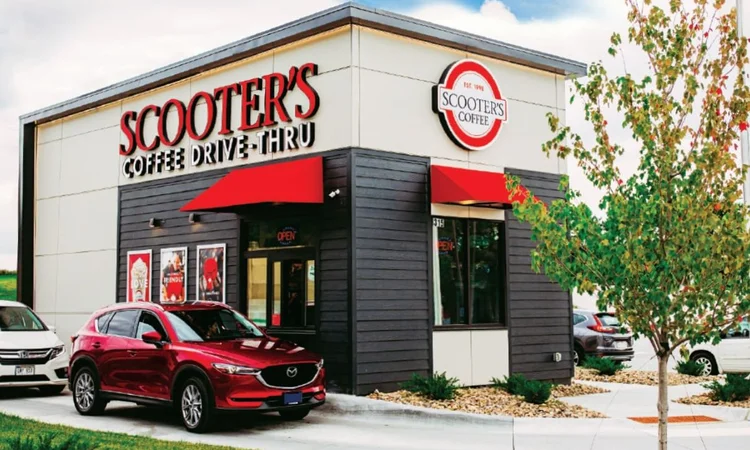
Unlike traditional cafes, Scooter’s focuses primarily on drive-thru kiosks. This model reduces overhead costs, speeds up service, and caters directly to the needs of busy customers.
2. Commitment to Quality Coffee
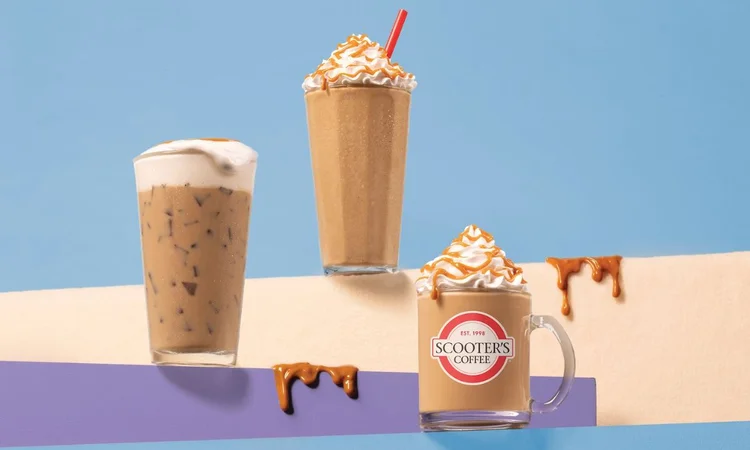
Scooter’s sources 100% Arabica beans, roasted in small batches to maintain freshness. Their signature drink, the Caramelicious®, has become a fan favorite and a symbol of the brand’s quality commitment.
3. Strong Franchise Model
Scooter’s is a franchise-driven company, enabling entrepreneurs to be part of its growth story. With its low-cost drive-thru footprint and scalable operations, the brand has become attractive for franchisees seeking fast ROI in the booming coffee sector.
4. Customer-Centric Culture
The company’s tagline, “Amazing People, Amazing Drinks… Amazingly Fast®”, isn’t just marketing fluff. Scooter’s emphasizes friendly, personal customer service at every touchpoint, making drive-thru visits memorable.
The Menu: More than Just Coffee
[ Source - Scooter's Coffee]
While coffee is the core, Scooter’s menu goes beyond standard brews. Customers can enjoy:
Signature Drinks like Caramelicious®, Turtle Latte, and Candy Bar Latte.
Cold Brews and Smoothies for younger, health-conscious demographics.
Breakfast Food Options including burritos, muffins, and baked goods.
Seasonal Favorites that keep the menu fresh and engaging.
The variety allows Scooter’s to cater to both coffee purists and adventurous customers looking to try something new.
Scooter’s Coffee vs. Industry Giants
The U.S. coffee market is estimated to be worth over $95 billion, with Starbucks and Dunkin’ traditionally dominating. Yet, Scooter’s Coffee has steadily captured market share by focusing on drive-thru convenience and localized customer connections rather than sprawling café spaces.
While Starbucks invests heavily in digital ecosystems and Dunkin’ plays the affordability card, Scooter’s stays true to its niche: fast, high-quality coffee with a warm smile. This positioning has given it a competitive edge in suburban and commuter-heavy regions.
The Franchise Opportunity
One of Scooter’s strongest growth levers is its franchise model. The company actively recruits franchisees who share its vision of speed, service, and community connection. With relatively low overhead due to its small-format kiosks and simplified menu, franchise owners can operate efficiently while benefiting from the brand’s strong recognition and support.
In fact, Scooter’s has consistently ranked on Entrepreneur’s Franchise 500 list, reinforcing its reputation as one of the most promising business opportunities in the coffee sector.
Technology and Innovation: The Digital Push
Like other modern coffee brands, Scooter’s is investing in technology to enhance the customer experience.
Mobile Ordering & Loyalty Apps: Customers can order ahead, earn rewards, and enjoy exclusive promotions.
Operational Tech: Franchisees benefit from advanced training platforms and streamlined operations systems.
AI-Driven Drive-Thru Innovations: The company has been experimenting with AI-assisted ordering systems to further speed up service without compromising quality.
This digital-first approach ensures Scooter’s remains competitive in a world where consumer expectations for convenience are higher than ever.
Community & Culture: More Than Coffee
[Source - Scooter's Coffee Franchise]
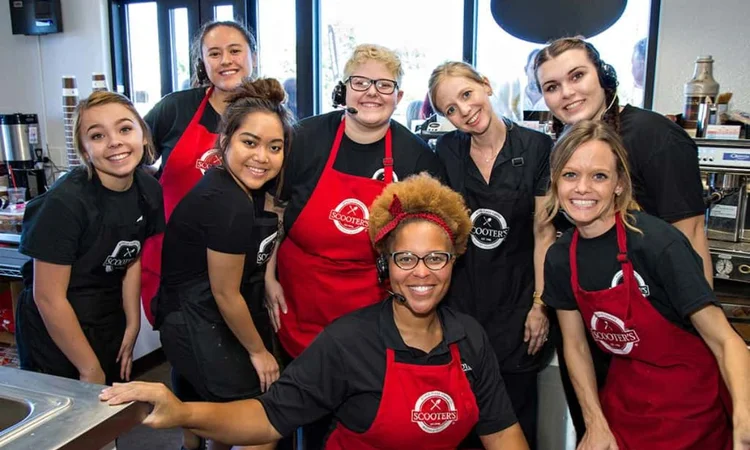
Scooter’s Coffee emphasizes its community-driven culture, often supporting local initiatives and charities in the areas it serves. Its expansion strategy also focuses on suburban markets and small towns, areas sometimes overlooked by bigger brands, allowing it to build deeper connections with customers.
This “small-town friendliness with national scale” has made Scooter’s not just a coffee stop, but a part of people’s daily lives.
Latest Developments in Scooter’s Coffee
Rapid Expansion: As of 2025, Scooter’s has crossed 750+ locations, with plans to add hundreds more in the next few years.
Strategic Partnerships: The brand has partnered with global suppliers to maintain sustainable coffee sourcing and high product quality.
Menu Innovations: Seasonal drink launches, such as peppermint mochas in the holidays and fruit-infused cold brews in the summer, keep customers coming back.
National Recognition: Scooter’s has been repeatedly recognized as one of the fastest-growing coffee franchises in America.
Challenges Ahead
No success story is without its hurdles. For Scooter’s Coffee, challenges include:
Competing with Global Brands: Starbucks’ dominance and Dunkin’s affordability factor remain significant threats.
Maintaining Consistency: With rapid franchise growth, ensuring consistent quality and service across all outlets is critical.
Evolving Consumer Preferences: As health-conscious consumers demand plant-based and sugar-free options, Scooter’s must continue innovating its menu.
Supply Chain & Costs: Like many food and beverage brands, fluctuations in coffee bean prices and logistics pose ongoing challenges.
The Road Ahead: Scooter’s Coffee Vision
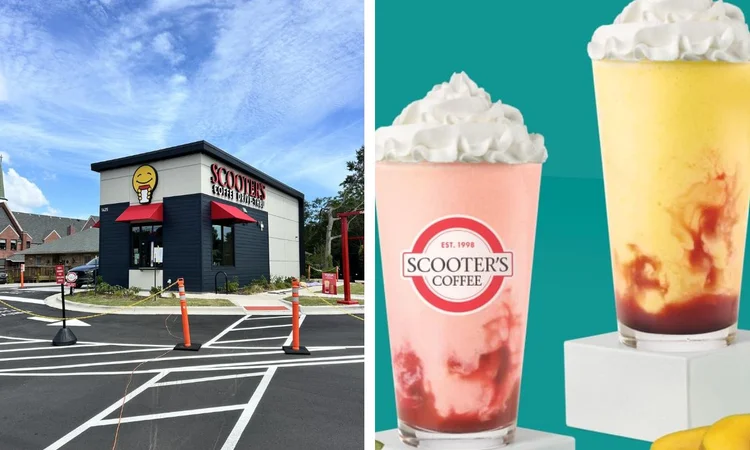
Scooter’s Coffee is positioning itself as the go-to brand for quick, high-quality coffee experiences across America. With an ambitious growth plan, ongoing investments in digital tools, and a strong focus on customer service, the brand is well on its way to becoming a household name.
Unlike its larger competitors, Scooter’s doesn’t aim to be everything for everyone. Instead, it thrives in its niche: fast, friendly, drive-thru coffee. And that clarity of purpose is perhaps its strongest recipe for success.
Final Thoughts
Scooter’s Coffee is more than just another coffee chain; it’s a symbol of how focused strategy, strong franchise partnerships, and customer-first culture can disrupt even the most competitive industries. By staying true to its mission of serving amazing drinks, amazingly fast, Scooter’s has won over millions of loyal fans and continues to brew up success nationwide.
As the demand for coffee grows and lifestyles become even faster-paced, Scooter’s Coffee’s drive-thru-first model and community-focused approach position it as not just a competitor, but a leader shaping the future of America’s coffee culture.







Leave a Reply
Your email address will not be published.