

The circular economy is a transformative model that replaces the traditional “take‑make‑dispose” paradigm with one built on resource restoration, reuse, recycling, and regeneration. Rather than creating waste, products and materials remain in use for as long as possible, and end-of-life materials feed back into the economy. This shift not only curbs waste and cuts carbon emissions but also opens new value sources, lowers costs, strengthens brand reputation, and increases customer loyalty.
In this article, we'll explore core strategies in circular economies, peppered with real-world corporate examples demonstrating how these frameworks are moving from theory to practice.
1. Circular Design: Designing for longevity, disassembly & recyclability
Design for lifespan & easy repair
IKEA crafts items that can be flat-packed, dismantled, repaired, and recycled. Its global take‑back program, refurbishment services, and second-hand resale chain help divert thousands of tons of furniture from landfills. IKEA aims to be fully circular by 2030, including using recycled and bio‑based materials across its catalog.
Patagonia’s Worn Wear program extends garment life through repairs and resale. It also encourages customers to return old gear for recycling, reducing demand for new materials and reinforcing brand values.
Material innovation
Stella McCartney employs zero‑waste design and regenerative materials like mushroom leather (Mylo) and recycled nylon, setting a benchmark for high‑fashion circularity.
DyeCoo, partnering with Nike and IKEA, developed a chemical‑free, waterless dyeing process that absorbs nearly 98% of dye, dramatically lowering energy and resource usage in textiles.
2. Product-as-a-Service (PaaS), leasing & rental models
Philips offers “lighting-as-a-service,” leasing lighting systems while retaining ownership. Philips handles upkeep and upgrades, refurbishes returned equipment, and reduces e‑waste. This model has delivered up to 80% energy savings compared to conventional lighting installations, along with extended product life and a clear circular win.
MUD Jeans uses a lease model: customers pay monthly (~€10/month), can return jeans for recycling or swap for a new pair at discounted lease rates, or keep the jeans at end‑of‑lease. The system uses up to 40% post‑consumer recycled denim, recycles water via reverse osmosis, and supports chemical‑plus‑mechanical recycling to reach 100% recycled cotton in their “Road to 100” project.
3. Take-back & closed-loop recycling
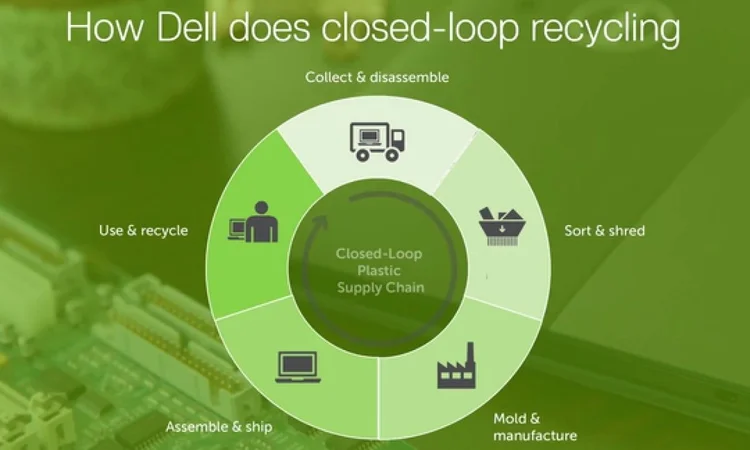
[Source - Dell]
Dell’s Closed‑Loop Recycling initiative collects old electronics, extracts metals, plastics and rare-earth magnets, and reuses them in new products, saving materials and embodied carbon. By 2030, the company targets 50% recycled/renewable materials in its lineup.
Unilever works toward 100% reusable, recyclable, or compostable packaging by 2025. The company has piloted refill stations and ramped up use of post-consumer recycled plastic (over >100,000 tons in 2024).
H&M operates a global garment collection program: customers drop off unwanted clothing (any brand), earning discounts. Collected textiles are reused, upcycled, or recycled into new fabrics, helping H&M move toward closed‑loop production.
4. Re‑manufacturing & resource recovery
Renault runs a remanufacturing facility in France, reconditioning used car parts into fully re-certified spares. This reduces raw‑material extraction and energy consumption while enabling lower-cost products.
Circular Computing, based in the UK, takes used HP, Dell, and Lenovo laptops through a proprietary “360‑point remanufacturing process.” The result: refurbished laptops that meet new‑device quality standards, certified by BSI Kitemark. Each laptop saves ~316 kg CO₂ and conserves ~1,200 kg of raw earth resources.
5. Waste-to-material innovations & upcycling
Ashaya, in Pune, India, uses patented chemo-mechanical processes to convert hard‑to‑recycle multi-layered plastics (e.g., snack wrappers) into a polymer blend used in consumer goods like eyewear and corporate merchandise. It bridges informal waste‑picker ecosystems with formal material cycles.
Caviro (Italy’s wine sector) transforms byproducts like lees and bran into wine‑based paper, renewable energy via biodigesters, and other materials. They valorize ~99% of waste, achieve energy self-sufficiency, and cut CO₂ emissions by ~102,000 t/year.
Terracycle creates recycling programs for materials often deemed non‑recyclable, cigarette butts, oral‑care items, beauty packaging, etc. Partnering with mass brands (Colgate‑Palmolive, Gillette, L’Oréal), they’ve collected and transformed over 7.7 billion pieces of otherwise landfill-bound waste.
6. Urban mining & industrial symbiosis
Schneider Electric embraces remanufacturing, take-back programs, modular design, and IoT-enabled maintenance. Circular activities now comprise ~12% of revenue, driven by resource recovery and urban-mining partnerships to reuse used electronics and components.
Interface (flooring leader) runs its ReEntry program, and old carpet tiles are collected and recycled into new tiles. This closed-loop system significantly reduces waste while keeping materials in preservation cycles.
7. Data transparency & traceability
Brands are increasingly leveraging technology to track product life cycles, improve supply chain transparency, and enable circular decision‑making.
Accenture, AkzoNobel, Coop, Vestas, Nestlé, and Coca‑Cola have adopted digital Product Information Management (PIM) to visualize material flows, carbon footprints, and end‑of‑use pathways. Better data enables better circular design and consumer insight.
Unilever and Coca‑Cola are investing in blockchain and digital watermarking (HolyGrail initiative) to enhance the recyclability of packaging and strengthen extended producer responsibility compliance.
8. Community-based solutions & plastic credit systems
RiverRecycle (Finland/India) works with local communities around polluted rivers to collect plastic waste before it reaches the oceans, transforming it into value‑added products like recycled boards or PET bales. They also generate plastic credits to fund scaling, creating jobs, and formalizing waste‑picker livelihoods.
Why These Strategies Matter
Environmental impact reduction: Extending product lifetimes, recovering materials, replacing virgin inputs, and diverting waste all drive down emissions, reduce landfill burden, and preserve ecosystems.
New revenue streams & cost savings: Leasing, take-back buy‑back credit, resale, remanufacturing, and waste recovery open fresh business models, often with lower costs and greater customer appeal.
Stronger brand trust & customer loyalty: Companies like Patagonia, IKEA, and MUD Jeans build emotional resonance by demonstrating values-aligned commitment, leading to brand differentiation.
Regulatory compliance & future readiness: With legislation such as the EU Circular Economy Action Plan, Digital Product Passport (DPP), and extended producer responsibility frameworks entering force, early adopters are already ahead.
Scalability through collaboration: From startup innovators like DyeCoo and Without to global brands and supply‑chain partners, collaboration is critical. Corporate ecosystem partnerships accelerate scaling and infrastructure building.
Putting It All Together: A Practical Framework
Here’s a modular three‑phase implementation plan, adapted from strategy frameworks like Deloitte:
Act: Embed circularity internally
Audit resource and waste flows
Set goals (e.g., percentage recycled content, take‑back uptake, leasing revenue share)
Pilot designs for repairability and material loops (e.g,. using recycled plastic or modular build)
Implement: Build infrastructure & business models
Launch take-back, rental/lease, and repair services
Retrofit supply chains with recyclers, remanufacturers, and packaging systems
Deploy data systems for traceability and metrics
Advocate: Build ecosystem & policy support
Partner across industry, academia, and startups
Engage policy makers to secure incentives (EPR, credits, standards, reporting frameworks)
Educate customers and promote behavior shifts toward reuse, repair, and circular consumption
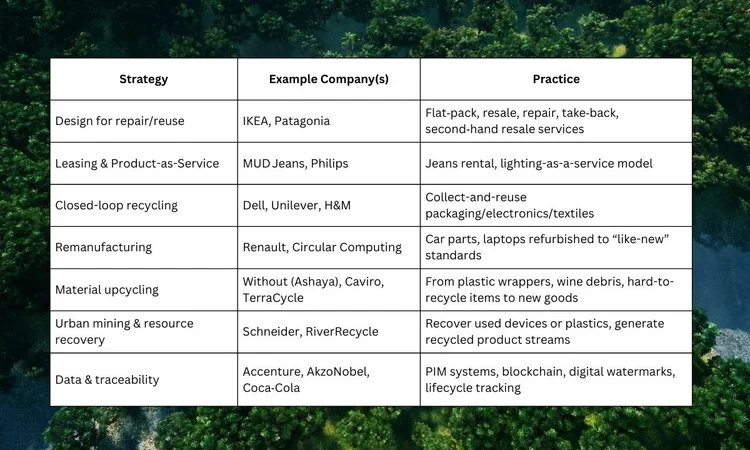
Summary Table: Examples by Strategy
Looking Ahead
We are in the early stages of a global shift toward circular systems. Strong tailwinds are building:
Technology & innovation (e.g., chemical recycling, IoT, digital passports)
Regulatory push (EPR laws, EU renewable mandates, material traceability)
Behavioral change (consumers demanding sustainability, brands seeking purpose)
Collaboration networks (startups with incumbents, government, academia)
By studying leading companies, from Patagonia, IKEA, Dell, and Unilever to local innovators like Without and RiverRecycle, we learn that circular economy strategies are both achievable and scalable across industries and geographies.
Conclusion
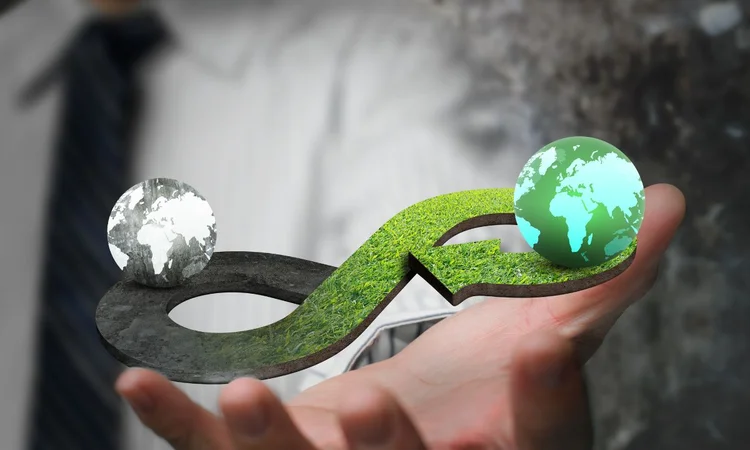
The circular economy is more than a buzzphrase; it’s fast becoming a business imperative. Through strategies like circular design, leasing models, take-back systems, remanufacturing, material upcycling, and digital traceability, companies worldwide are innovating sustainable practices that protect the planet and drive value.
Whether you're a startup, a mid-size brand, or a multinational, prioritizing circular economy strategy today isn’t just ethical, it’s smart business. Companies that persist in incremental improvement, invest in infrastructure, collaborate with partners, and advocate for supportive policies are the ones shaping a future where waste is obsolete and resource loops are closed.









Leave a Reply
Your email address will not be published.