


[Source -The Grocer]
The world of food delivery is entering a new era. In October 2025, Deliveroo officially became part of DoorDash, and with this transition came the appointment of a fresh face at the helm: Miki Kuusi, co-founder of Wolt and Head of International at DoorDash, now taking on the role of Deliveroo CEO.
This shift marks more than just a leadership change. It’s a signal that Deliveroo, once an independent disruptor in the UK and Europe, is repositioning itself in a world now dominated by global platforms with scale, data, and integration advantages. But how exactly might Kuusi steer Deliveroo’s next phase? And what strategic, operational, and cultural levers will he likely pull to reshape the company?
In this blog article, we explore five key dimensions through which Kuusi may lead Deliveroo’s new era, along with pitfalls to watch and opportunities to seize.
1. Bridging Two Cultures: Integration Without Dilution
One of Kuusi’s toughest challenges is to fuse Deliveroo’s brand DNA with the strategic and operational heft of DoorDash, without losing what made Deliveroo distinctive in the first place.
Preserving brand identity: DoorDash has committed to keeping the Deliveroo app, brand, and operations—at least publicly—intact for customers, merchants, and riders. Kuusi must embody that promise, ensuring that the “local feel” and customer-centric quirks of Deliveroo remain visible even as back-end systems, logistics, or data platforms begin to merge.
Cultural alignment: Kuusi’s roots lie in the startup ethos of Wolt, nimbleness, rapid iteration, and experimentation. He will need to transplant that mindset into an organization now part of a much larger, more structured parent. Striking the balance between agility and disciplined execution will be crucial.
Leadership transition: As he relocates to London and assumes day-to-day oversight, Kuusi must win the trust of existing Deliveroo leadership and stakeholders. That means listening first, and showing respect for what worked under Will Shu, while slowly introducing new processes, metrics, and expectations.
If he mismanages this cultural integration, he might alienate core teams. But if he gets it right, he can harvest the best of both worlds: local passion plus global scalability.
2. Supercharging Technology & Data Synergies
[Source - Avi Gopani]
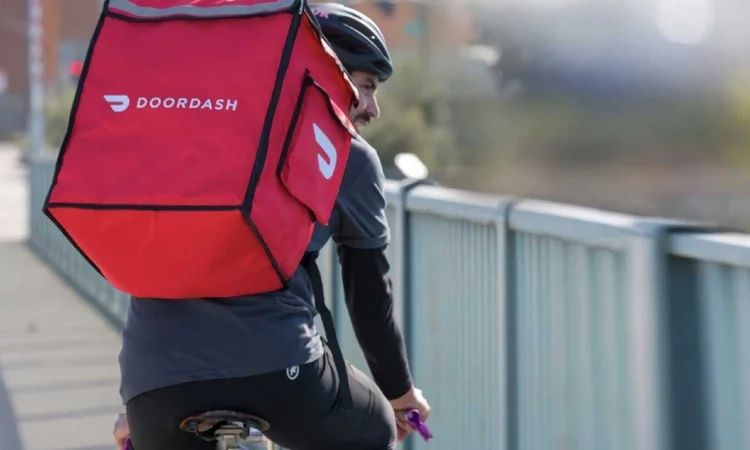
One of the primary motivations behind the DoorDash–Deliveroo union is the opportunity to combine technology stacks, data, and innovations. Kuusi is in a unique position to exploit these synergies.
Leveraging DoorDash’s data and AI capabilities: DoorDash brings advanced demand forecasting, logistics optimization, and machine-learning tools built from its scale in the U.S. Kuusi can accelerate Deliveroo's logistics, dynamic pricing, allocation, and route optimization by integrating or adapting those systems.
Shared product innovation: Shared infrastructure can enable faster experimentation of subscription models, loyalty schemes, “prime-like” offerings, or vertical expansions (e.g., grocery, convenience). Kuusi’s experience at Wolt, where expansion into micro-deliveries, dark stores, and new verticals was frequent, provides a blueprint.
Cross-market learnings: Kuusi’s tenure as DoorDash’s Head of International means he already understands the tradeoffs of regional differences, regulation, consumer behavior, and urban density, and can calibrate how to adapt core tech effectively across geographies.
Platform harmonization and modularization: While full tech unification may be years away, Kuusi can push for modular systems that allow parts of Deliveroo to plug into DoorDash’s core stack selectively, allowing for flexibility, lower migration risk, and incremental gains.
On the flip side, over-aggressive integration can risk disruption to ongoing operations. Kuusi must phase technological upgrades carefully to avoid service outages or rider/merchant friction.
3. Rebalancing Growth, Margins & Markets
Deliveroo’s journey under Will Shu involved aggressive expansion, but profitability and cost control remained elusive. Kuusi must recalibrate the balance between growth ambitions and sustainable margins.
Pruning and doubling down: Not all markets or verticals deliver compelling unit economics. Kuusi will need to review underperforming markets or segments and either exit, restructure, or reallocate investments. His choices here will reflect whether Deliveroo becomes a scale-first or profitability-first engine.
Margin improvement via efficiency: With tech synergies and logistics optimization, Kuusi can push margins by reducing delivery costs (faster routes, better clustering), improving pay-per-order, and reducing idle capacity for riders.
Monetization expansion: Beyond just delivery fees and commission, Kuusi can explore new monetization levers, merchant SaaS tools (ordering, inventory, analytics), subscription tiers, ad/marketing placements, and premium consumer packages. DoorDash’s U.S. arm has experimented in such areas; Kuusi can import lessons.
Strategic diversification: In some markets, delivering food may not be the only vector. Kuusi may explore consolidation with grocery, pharmacy, convenience, or “last-mile logistics for non-food”, thus hedging risks by diversifying demand sources.
Investor alignment: As part of a publicly visible group (DoorDash/Deliveroo), Kuusi must meet expectations for margins, growth, and returns. The tension between short-term investor pressures and long-term strategic plays will test his resolve.
If improperly calibrated, cost-cutting or over-diversification can undermine morale or dilute focus.
4. Reimagining Stakeholder Relations: Riders, Merchants & Regulators
[Source - Business Insider]
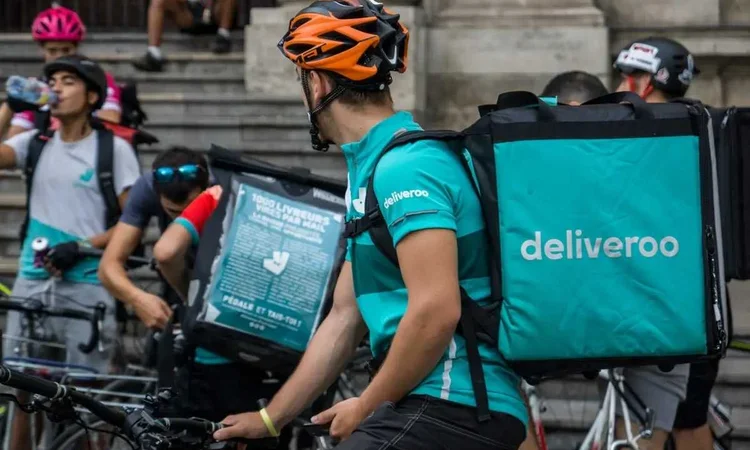
In the delivery economy, how a CEO treats the “middle”, the riders, the merchants, and regulatory authorities, matters deeply. Kuusi’s play here could make or break public perception, operational viability, and scalability.
Rider experience and retention: Deliveroo riders have often voiced concerns about pay, status, scheduling, and employment classification. Kuusi must articulate a clear policy, perhaps preserving gig flexibility while enhancing benefits, safety, or incentives. Any misstep risks strikes, churn, or reputational backlash.
Merchant partnerships: Kuusi must reassure restaurant and merchant partners that the integration will bring more value: better logistics, data, marketing, and demand insights. Merchant trust is fragile; fees, platform priority, and support will all be pressure points.
Regulatory engagement: Food delivery is heavily regulated and politically sensitive. Kuusi will need to map regulatory regimes across the UK, EU, the Middle East, and beyond, and stay ahead of labor, safety, data, zoning, and consumer protection rules. His ability to engage governments, unions, and communities will be tested, especially as Deliveroo grows in scale.
Public and ESG reputation: With sustainability, urban congestion, emissions, and labor rights under scrutiny, Kuusi must embed ESG goals (e.g., greener transport, packaging, worker welfare) into Deliveroo’s roadmap. That helps mitigate reputational risk and gain goodwill from municipalities.
If he underdelivers on promise or transparency, backlash from riders or regulators could undercut even the most elegant growth plan.
5. Vision, Communication & Brand Renewal
At the end of the day, Kuusi’s success will hinge on whether customers, employees, and external audiences believe in his vision. He must serve not just as an operator, but as a storyteller.
Crafting the narrative of continuity + change: Kuusi has already spoken about being “grateful” for what Deliveroo built and excited to “learn together” in the next phase. He must maintain that tone: assuring stakeholders of continuity while signaling necessary evolution, not disruption for disruption’s sake.
Global vs local messaging: As Deliveroo becomes more embedded in DoorDash’s global footprint, Kuusi will need to tailor messages; the UK market’s challenges differ from those in the UAE, EMEA, or emerging markets. He must avoid being perceived as an external takeover but rather position himself as a champion of local growth at scale.
Internal communications & morale: In a merger setting, uncertainty and anxiety abound. Kuusi must invest in internal storytelling, clarity of roles, career paths, training, and transparent communication to retain talent and align energy behind a new mission.
Customer-facing brand refresh: Over time, Kuusi may choose to refresh user experience, loyalty programs, branding, or app design, but in a way that feels evolutionary, not alienating. The goal: signal new capabilities while preserving user familiarity.
Setting an inspiring north star: Whether positioning Deliveroo as “the local commerce enabler” or “the platform where local wins everywhere,” Kuusi must articulate a bold north star ambition that rallies stakeholders.
Risks & Challenges: What Could Go Wrong
Over-centralization and deskilling: As integration deepens, local markets may lose autonomy and speed. Markets that thrived via local leadership might get hamstrung if decisions need global sign-off.
Technology disruption mis-timing: Large-scale migrations of systems can lead to outages, rider/merchant disruptions, or degraded service quality. Kuusi must sequence upgrades carefully.
Cultural clash and attrition: If Deliveroo’s teams feel steamrolled or misaligned with DoorDash’s priorities, key talent may leave, weakening institutional memory.
Regulatory backlash or labor conflict: Mismanaging rider relations or confronting new classification laws could spark lawsuits or negative media.
Diluted brand identity: If Kuusi leans too heavily on a “DoorDash-first” narrative, Deliveroo may lose its differentiation in competitive markets.
Investor pressure for short-term profits: Deliveroo may get squeezed to show margin improvements prematurely, limiting bold strategic experiments.
Opportunities That Kuusi Can Unlock
Faster scale and market reach: With DoorDash’s capital, tech, and infrastructure backing, Deliveroo can expand more confidently into underpenetrated geographies.
Accelerated innovation: Shared R&D and cross-market learning can lead to faster feature rollouts, improved logistics, and new verticals.
Stronger ecosystem value: By offering merchants not just orders, but data tools, marketing, inventory, and omnichannel access, Deliveroo can deepen stickiness.
Better unit economics via shared density: As operations consolidate, Kuusi may optimize overlapping delivery areas, clustering, or cross-utilization of riders across adjacent platforms.
Brand leadership in regulation & ESG: If Kuusi aggressively engages with regulators, pushes rider welfare norms, and invests in sustainability, Deliveroo can lead the industry's moral high ground.
Projected Timeline of Influence
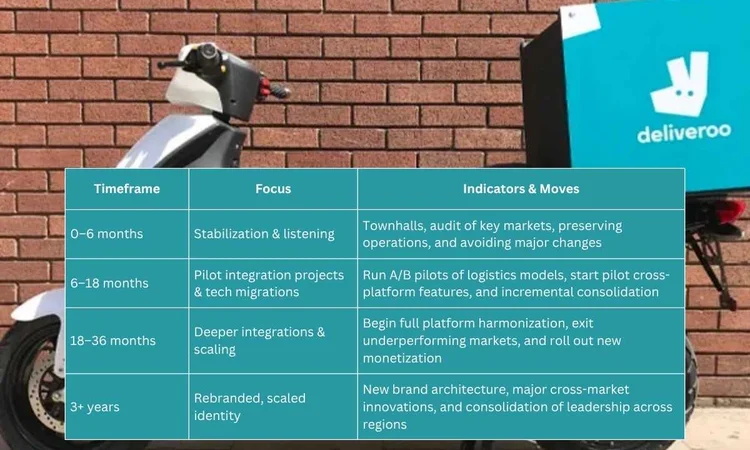
Here’s a speculative horizon of how Kuusi’s leadership might unfold:
Conclusion: A Defining Moment at a Crossroads
Deliveroo’s journey under Will Shu was audacious: build a premium-focused, tech-first food delivery platform in a tough, competitive market. The momentum was real, but challenges around profitability, regulatory pressures, and saturated markets persisted.
Now, under Miki Kuusi, Deliveroo enters a new phase, one defined by scale, integration, ambition, and risk. Kuusi’s experience with Wolt, his understanding of international markets, and his positioning within DoorDash give him a rare vantage. His task is to harness DoorDash’s muscle while preserving what made Deliveroo resonate.
Over the coming months and years, Kuusi’s success will be judged not just on revenues or margins, but on whether Deliveroo retains its heartbeat, the local reliability, brand trust, rider commitment, and merchant loyalty, while evolving into a platform worthy of global competition.
If he succeeds, Kuusi can position Deliveroo not simply as a UK or European delivery app, but as a centerpiece of a global-commerce engine where local wins everywhere. But the tightrope is narrow, and every decision, every integration, and every communication will matter. The next chapter for Deliveroo is being written now, and Kuusi holds the pen.









Leave a Reply
Your email address will not be published.