


In an era where agility and innovation drive market dominance, the boundary between academia and industry is becoming increasingly porous. As organizations seek competitive advantages through talent development, corporate training is emerging not merely as a tool for internal upskilling, but as a dynamic conduit for academic-industry collaboration. In the United States, where industries and educational institutions have traditionally operated in silos, corporate training is now bridging that gap, creating mutual value and paving the way for groundbreaking innovations.
Rethinking Corporate Training: From Inward Focus to External Synergy
Corporate training has historically been an inward-facing strategy focused on aligning employees with organizational goals, technology adoption, or compliance requirements. But forward-thinking companies are reimagining it as an outward-facing lever that connects them with the academic world. This shift is crucial for U.S.-based firms responding to the evolving demands of a knowledge-based economy.
Instead of merely licensing content or sending employees to seminars, corporations are now co-creating learning modules with universities, sponsoring research, and jointly developing curriculums that serve both immediate talent needs and long-term innovation goals. Such integration fosters a virtuous cycle: industry informs academia with real-world challenges while academia feeds innovation pipelines with research and fresh thinking.
This change isn’t just about form—it’s also about mindset. Businesses are adopting more academic-style inquiry and reflection into their corporate training models, while academic institutions are being more agile and iterative in content development. The fusion of these approaches leads to deeper learning, more nuanced critical thinking, and an ecosystem where theory and practice evolve in tandem.
Case in Point: Strategic Collaborations Driving Innovation
One standout example is IBM’s collaboration with Northeastern University. The tech giant worked with academic experts to create modular, stackable credentials in artificial intelligence and cloud computing that count toward both corporate training outcomes and formal degrees. This model is increasingly being replicated in other sectors such as healthcare, logistics, and finance.
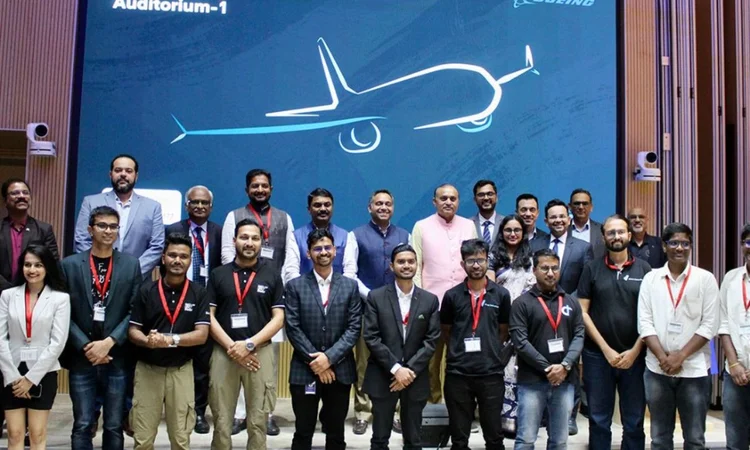
Another illustration of success is Boeing’s partnership with Arizona State University (ASU), where they created a customized engineering curriculum aimed at mid-career professionals seeking advancement. Through this initiative, employees not only upgraded their technical capabilities but also engaged in real-world problem-solving that benefited both their employer and the academic researchers involved.
Moreover, corporate training is influencing educational pedagogy. Institutions are now adopting agile course structures, real-time feedback loops, and problem-based learning—techniques first popularized in corporate environments. According to a 2023 LinkedIn Workplace Learning Report, 89% of L&D professionals believe that skill-building should be woven into every aspect of the employee experience, which supports this convergence of training and education.
These collaborations also introduce a new level of accountability. Industry partners ensure that the curriculum remains relevant, while academia offers structure and academic rigor. This balanced exchange means that graduates of such programs are far better prepared to enter, adapt, and innovate within the modern workforce.
Fueling Economic Growth through Collaborative Learning

As of 2024, nearly 54% of U.S. employers reported difficulty filling positions due to skill gaps, particularly in high-growth sectors like tech, biotech, and green energy. Corporate training programs tailored in collaboration with academic institutions are addressing these gaps more efficiently than traditional degree paths. These programs accelerate workforce readiness, reduce onboarding time, and ultimately stimulate innovation by injecting skilled, context-aware employees into mission-critical roles.
Localized benefits are becoming increasingly visible. In states like Texas and California, companies that integrate academic-led corporate training into their talent pipelines are seeing higher retention rates and reduced time-to-productivity metrics. A study by the National Center for Education Statistics found that employees engaged in blended academic-corporate training programs were 40% more likely to stay with their companies beyond three years.
Additionally, such partnerships are catalyzing regional innovation ecosystems. In cities like Boston, Austin, and San Diego, localized training initiatives powered by corporate-academic alliances are transforming communities into vibrant talent hubs. These regional strategies not only meet workforce demand but also attract startups, investors, and federal grants aimed at fostering STEM excellence.
The effect on economic mobility can’t be overlooked either. Many of these training programs offer alternative pathways to career advancement for populations traditionally underserved by higher education, such as veterans, first-generation students, and workers from rural or economically disadvantaged areas. In these contexts, corporate training becomes not just an innovation tool, but a force for equity and social impact.
A New Paradigm: Education as a Shared Responsibility

Corporate training is subtly rewriting the social contract of education in the U.S. While public institutions continue to shoulder foundational learning, private enterprises are taking a more proactive role in lifelong learning. The result is a blended model where neither academia nor industry stands alone in preparing the future workforce.
This shared responsibility model has also led to an emergence of hybrid credentials. Known as “industry-recognized certifications,” these credentials are gaining traction as valid alternatives or supplements to traditional degrees. Google’s Career Certificates and Amazon’s Mechatronics and Robotics Apprenticeship programs are prime examples of how corporate training is stepping into the credentialing space.
This shift is also reshaping employer branding. Companies that invest in corporate training programs tied to educational outcomes are seen as thought leaders and desirable employers. According to Deloitte’s 2023 Human Capital Trends report, 71% of workers believe employers should take an active role in preparing them for the future.
Organizations that meet this expectation are likely to gain a competitive edge not only in talent acquisition but also in innovation performance.
There is also a strategic advantage to be gained in terms of resilience. Firms that embed learning into their operations are better equipped to pivot during times of crisis—be it a pandemic, supply chain disruption, or technological leap. Continuous learning enables continuous adaptation, which in turn fuels sustainable innovation.
For corporate training to fully realize its potential as a catalyst for academic-industry innovation, scalability and accessibility are key. U.S.-based companies must invest in scalable platforms that can support microlearning, immersive simulations, and credential-based learning across diverse geographies. Simultaneously, academic institutions must embrace more flexible accreditation models that recognize corporate-led instruction and experiential learning.
Policymakers, too, have a role to play. Incentivizing cross-sector partnerships through tax credits, research grants, and public-private workforce initiatives will be critical to sustaining this trend. As economic volatility and technological disruption continue to challenge traditional models, the value of corporate training as a transformative force in education and innovation will only grow.
Another key enabler is technology. AI-driven personalization, real-time skills analytics, and augmented reality are enhancing the efficacy of corporate training modules. These technologies allow for just-in-time learning, reducing downtime while boosting performance. When these tools are integrated with academic research and institutional knowledge, the possibilities for scalable impact multiply.
Conclusion
The future of innovation in the United States may very well depend on how seamlessly corporate training can knit together the intellectual capital of academia with the operational rigor of industry. As boundaries dissolve, what emerges is not just a smarter workforce, but a smarter system—one that is capable of learning, evolving, and thriving together.
Corporate training is no longer a peripheral HR function. It is, increasingly, the beating heart of academic-industry innovation. By aligning educational excellence with business imperatives, it builds bridges where gaps once existed, enabling a holistic ecosystem where learning never stops and progress is shared.










Leave a Reply
Your email address will not be published.