
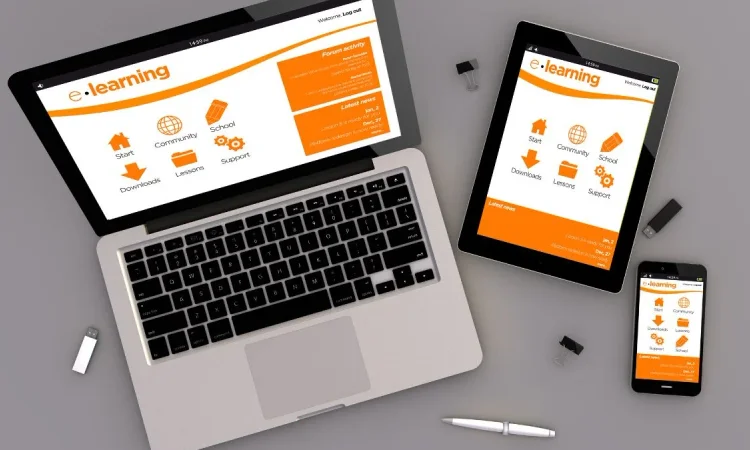
In a quiet corner of a rural village in Kenya, a teenager logs into her tablet and begins watching a coding lesson from MIT. Halfway across the world in Colombia, a mother of two attends a virtual lecture on entrepreneurship. In bustling Mumbai, a factory worker is brushing up on English via a mobile app during his lunch break.
This isn’t the distant future. This is education, redefined, without borders, without gatekeepers, and limitations.
The rise of online learning platforms has sparked a global transformation, one that is reshaping what education means and who gets to access it. With nothing more than a device and an internet connection, anyone, anywhere, can now learn just about anything, from astrophysics to accounting, languages to leadership.
In this new frontier of education, knowledge is no longer a privilege. It’s becoming a right, delivered across borders and economic divides through the pixelated power of the internet.
Let’s explore how online platforms are not just changing classrooms, but changing lives.
Breaking Down the Traditional Barriers
For centuries, education has been a system of barriers: location, wealth, gender, social class, and political freedom. It was built on scarcity; only a few could attend the best schools, afford tuition, or gain access to quality teachers.
Online education has flipped that model on its head.
No longer must a student live near a university to benefit from its resources. No longer is tuition the only ticket to a world-class education. Online platforms like Coursera, edX, Khan Academy, Duolingo, Udemy, and many others have democratized access, offering affordable or even free education on a global scale.
Suddenly, a young woman in Afghanistan can study data science from Harvard, or a retired man in Italy can earn a certificate in digital marketing from Google.
This revolution is powered by three key enablers:
Global connectivity: With mobile internet expanding rapidly, even remote communities can access educational resources.
Scalability: One course can reach millions, without building more classrooms.
Flexibility: Learners can study at their own pace, on their own time, and often in their language.
The Platforms Powering Change
Let’s take a closer look at some of the trailblazing platforms that are rewriting the rules of education:
Coursera & edX
Founded by Stanford and Harvard professors, respectively, these platforms partner with top universities and companies to deliver courses, degrees, and professional certificates. With options ranging from beginner to postgraduate level, they’ve opened elite education to the masses.
Khan Academy
What started as simple math videos by Sal Khan for his cousin is now a global nonprofit offering K–12 curriculum in over 40 languages. It’s free, intuitive, and used by millions of students worldwide.
Duolingo
By gamifying language learning, Duolingo has helped over 500 million users across the world learn new languages, from English to Swahili, Navajo to Hindi.
LinkedIn Learning & Udemy
These platforms bridge the skills gap in the workplace, offering bite-sized, practical lessons in everything from coding and Excel to mindfulness and business strategy.
Each platform serves different niches, but together, they’ve created an ecosystem of access, proving that knowledge is truly borderless.
Changing Lives, One Lesson at a Time
For many, online learning isn’t just about convenience; it’s about opportunity, empowerment, and survival.
✦ The Refugee with a Dream
Lina, a Syrian refugee in Jordan, couldn’t return to school after fleeing her home. But through Coursera’s refugee program, she completed a business management certificate and is now launching her own online bakery business with the help of virtual mentors.
✦ The Farmer Who Became a Coder
Carlos, a former farmhand in Mexico, used free programming courses from freeCodeCamp to learn web development. Three years later, he works as a remote developer for a Canadian tech startup—without ever leaving his hometown.
✦ The Grandmother Going Back to School
Miriam, 63, from the Philippines, always wanted to understand finance. She now manages her family’s business more confidently after completing a personal finance course on Udemy.
These stories highlight a simple truth: education is no longer a passport stamped by institutions, but a path forged by determination and a Wi-Fi connection.
The Equity Gap: Not Quite Solved
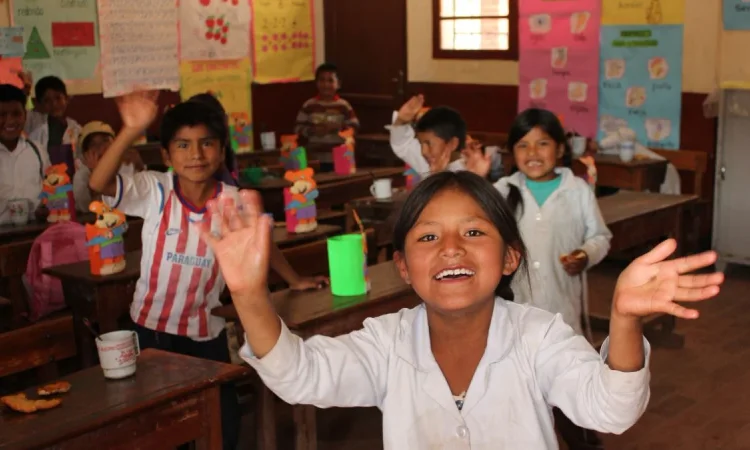
While online education has bridged many gaps, it hasn’t eliminated all of them. Access is only the first hurdle. True educational equity also depends on:
Reliable Internet Access
Roughly 2.7 billion people still lack internet access, primarily in rural and underserved regions. Without connectivity, even free education remains out of reach.
Digital Literacy
Having a device is one thing, knowing how to use it effectively for learning is another. Many learners, especially older or marginalized ones, need training to navigate digital platforms.
Self-Motivation and Support
Online learning demands a high degree of self-discipline. For those juggling jobs, caregiving, or unstable living conditions, completing a course without guidance can be difficult.
That’s why the future of borderless education isn’t just about content. It’s about building supportive ecosystems, mentorship, peer networks, localized support centers, and digital literacy training.
Governments and Institutions Catching Up
The massive growth of online education has not gone unnoticed by policymakers. Governments, universities, and employers are beginning to formally recognize online credentials, integrate hybrid models, and fund open learning initiatives.
Examples include:
India’s SWAYAM platform, which offers government-backed online courses from top universities for free.
France’s FUN-MOOC, making higher education accessible across French-speaking countries.
Africa’s eLearning Africa Initiative, a conference and platform for connecting educators across the continent.
Even the World Bank and UNESCO now fund online learning hubs in developing nations, recognizing that education is key to breaking cycles of poverty and creating economic mobility.
Beyond the Classroom: Real-World Impact
Online learning isn’t just transforming how we get degrees; it’s transforming how we think, work, and grow.
Entrepreneurs are launching businesses with YouTube tutorials and Udemy courses.
Parents are homeschooling their children with free Khan Academy videos.
Retirees are exploring philosophy or learning a new language to keep their minds sharp.
Employees are reskilling into new industries without quitting their jobs.
In a world where industries are evolving rapidly, the ability to continuously learn and adapt is the new currency, and online platforms are the mint.
The Future of Education: Personalized, Global, Lifelong
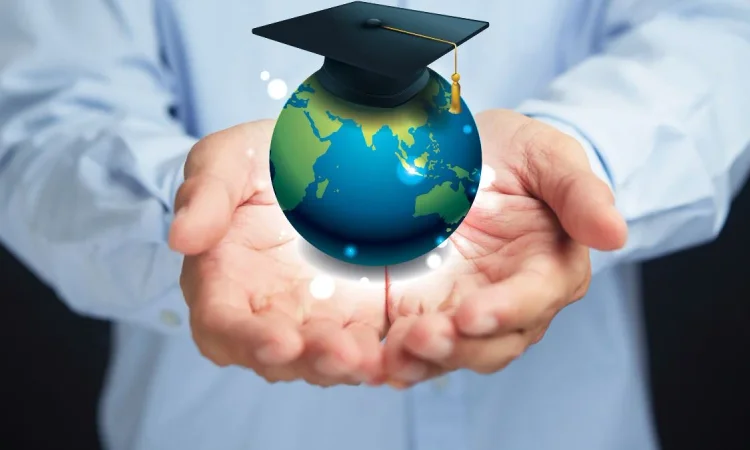
Looking ahead, we can expect education to become even more tailored, immersive, and interconnected:
AI-powered learning paths will adapt in real time to learners’ needs, strengths, and pace.
Virtual and augmented reality will simulate real-world scenarios for medical, engineering, and vocational training.
Blockchain-based credentials will allow for secure, portable verification of skills.
Global learning communities will connect peers from every corner of the world to collaborate on real-world problems.
The lines between formal and informal education will blur. Learning will no longer be something you “finish” at 22; it will become a lifelong pursuit, fueled by passion, curiosity, and relevance.
Final Thoughts: A World Reconnected by Learning
Education has always been a force for change, but now, it's a force without borders.
We are witnessing a profound shift where technology meets humanity’s deepest need: the desire to learn, grow, and connect. And as online platforms continue to evolve, they’re not just teaching us calculus or code, they’re teaching us what’s possible when the classroom has no walls, and the student has no limits.
This is education as a right, not a privilege. This is the classroom of everyone, everywhere. This is the future.
And it’s already here.



Leave a Reply
Your email address will not be published.