


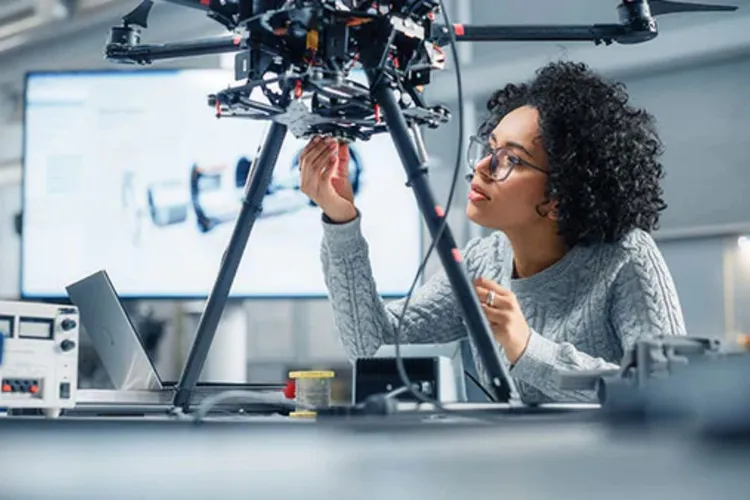
In an era where technological advancements and innovation are accelerating at an unprecedented pace, traditional education models are struggling to keep up with the demands of the modern workforce. Enter project-based learning—a dynamic, hands-on approach to education that is transforming the way students engage with STEM (Science, Technology, Engineering, and Mathematics). Also, encouraging women in STEM fields proves to be crucial as they open doors for innovation, bring balanced ideation, & enhance creativity in decision-making.
The Need for a Paradigm Shift in STEM Education
Historically, STEM education has relied heavily on theoretical instruction, standardized testing, and rote memorization. While this approach ensures foundational knowledge, it often lacks practical application, leaving graduates ill-equipped for real-world problem-solving. The rapid evolution of industries such as artificial intelligence, biotechnology, and renewable energy demands a workforce that can think critically, collaborate effectively, and innovate with confidence.
Project-based learning fills this gap by immersing students in experiential learning environments where they tackle tangible problems, work in teams, and develop solutions that mirror industry demands. This method not only enhances technical acumen but also nurtures leadership qualities essential for STEM professionals in the 21st century.
Real-World Application: The Hallmark of Project-Based Learning

One of the primary advantages of experiential learning is its emphasis on real-world applications. Unlike conventional classroom settings where knowledge is often siloed, this approach encourages interdisciplinary thinking. For example, a project focused on designing a sustainable energy system requires students to integrate principles of physics, engineering, environmental science, and economics. By working on such multifaceted challenges, learners develop a holistic understanding of STEM disciplines and their interconnectedness.
Moreover, leading corporations and startups are increasingly partnering with educational institutions to implement project-based learning models. Tech giants like Google and Tesla, for instance, are actively engaging with students through mentorship programs, hackathons, and innovation challenges, providing them with hands-on experience and exposure to industry best practices.
Developing Essential Leadership and Soft Skills
Beyond technical expertise, project-based learning instills crucial leadership and soft skills that are often overlooked in traditional education. Through teamwork, students learn how to communicate effectively, manage conflicts, and leverage diverse perspectives to achieve common goals. Problem-solving and critical thinking are naturally embedded into the learning process, as students must navigate setbacks, iterate on their designs, and refine their solutions based on constructive feedback.
Additionally, this model cultivates resilience and adaptability—traits that are indispensable for STEM leaders facing the ever-evolving technological landscape. By working on projects that require iterative improvements and real-time decision-making, learners become adept at handling uncertainty, a skill that translates seamlessly into the professional world.
Encouraging Entrepreneurial Mindsets in STEM

Experiential learning does more than prepare students for traditional career paths; it also nurtures entrepreneurial thinking. Many of today’s most successful startups have emerged from student-driven projects that began as academic initiatives. Take, for example, BioBots, a company that started as a university project and went on to revolutionize the field of 3D bioprinting. By engaging in project-based learning, students are not just acquiring knowledge but are also identifying market gaps, testing prototypes, and transforming ideas into viable business solutions.
Entrepreneurship requires a unique blend of technical proficiency, creativity, and business acumen—all of which are honed through project-based learning. By giving students the freedom to explore, experiment, and take calculated risks, this approach fosters the next generation of startup founders and business leaders in STEM fields.
Bridging the Skills Gap Between Academia and Industry
A critical challenge in STEM education is the disconnect between academic training and industry expectations. Employers frequently cite the lack of job-ready skills among graduates as a major hiring concern. Project-based learning serves as a bridge by aligning educational outcomes with real-world industry needs.
For instance, software development boot camps and engineering design courses that incorporate experiential learning ensure that students graduate with portfolios showcasing tangible achievements. These portfolios not only enhance employability but also demonstrate a candidate’s ability to apply theoretical knowledge in practical settings.
Furthermore, by collaborating with industry professionals on projects, students gain invaluable networking opportunities and mentorship, often leading to internships and job placements. Companies, in turn, benefit from a talent pipeline that is already familiar with industry tools, methodologies, and expectations.
The Future of Project-Based Learning in STEM Leadership

As industries continue to evolve, so too must the methods used to cultivate future leaders. Project-based learning is rapidly gaining traction, not only in traditional academic settings but also in corporate training programs, executive education, and professional development workshops. Companies are recognizing its potential in upskilling employees and fostering a culture of continuous learning and innovation.
Throughout the last two decades, women in STEM have contributed a profound shift as they bring in groundbreaking ideas reshaping the landscape of business. A lot of women are shaping careers in technology, science, engineering, & marketing too. This increased visibility of working women has been an inspiration for young girls who are the future of the nation.
Additionally, emerging technologies such as virtual reality (VR) and artificial intelligence (AI) are enhancing project-based learning experiences, allowing students to engage in simulated environments that mimic real-world scenarios. These advancements are making experiential learning even more immersive, further preparing students for leadership roles in STEM industries.
Conclusion
Project-based learning is revolutionizing STEM education by bridging the gap between theory and practice, fostering critical leadership skills, and encouraging entrepreneurial thinking. As industries demand a workforce that is agile, innovative, and technically proficient, this educational approach is proving to be indispensable in shaping the next generation of STEM leaders.
For C-suite executives, startup founders, and managers, embracing real-world learning within their organizations and professional development initiatives can lead to a more skilled, adaptable, and future-ready workforce. As we move further into the digital age, one thing is clear: applied learning isn’t just shaping students—it’s shaping the future of STEM leadership.









Leave a Reply
Your email address will not be published.