

The Role of Digital Learning in Closing the Global Education Gap

Amanda
Amanda

The pandemic has helped us realize the importance of remote learning. The value of digital learning has reached upto $350 Billion in 2025 as of now. Millions of youth & students have been learning several sectors via the e-learning facilities. Via e-learning facilities, the most advantageous occurrence is for under-priveleged children. The costs are cut-down substantially as the fees are only & solely for education. Traditional school fees are a lot in comparison with the online education model. So it is extremely affordable.  

Breaking Down Geographical Barriers

One of the most significant advantages of digital learning is its ability to eliminate geographical constraints. Traditional education often requires physical attendance, which can be challenging for students in remote areas, conflict zones, or underserved communities. Online learning platforms, mobile applications, and virtual classrooms enable students to access high-quality education regardless of their location.

For example, initiatives like Khan Academy, Coursera, and edX offer world-class courses from leading institutions to learners in every corner of the world. Meanwhile, companies are integrating digital learning solutions into their corporate training programs, allowing employees in different regions to acquire new skills without relocating or incurring high travel costs.

Affordability and Accessibility

Education costs can be prohibitive, especially for individuals in developing nations. Tuition fees, textbooks, transportation, and accommodation add up to substantial financial burdens. Digital learning addresses this challenge by significantly reducing costs associated with traditional education models. Many online courses are available for free or at a fraction of the price of in-person programs, democratizing access to knowledge.

Additionally, mobile-first education solutions cater to populations with limited access to computers. With over 6 billion smartphone users worldwide, mobile digital learning platforms provide an inclusive way for people to gain new skills, regardless of economic status. Governments and private organizations are also investing in subsidized internet access and digital literacy programs to ensure equitable access.

Bridging the Skills Gap for the Future Workforce

The modern workforce demands continuous skill development, yet traditional education systems often fail to keep pace with industry changes. Digital learning allows for real-time curriculum updates, ensuring learners gain relevant skills that align with current job market needs.

Businesses, particularly startups and large enterprises, are using e-learning to upskill employees, improve productivity, and drive innovation. Online platforms provide tailored learning paths in areas such as artificial intelligence, data science, and cybersecurity—fields that are shaping the future economy.

Furthermore, companies are leveraging AI-driven adaptive learning, which personalizes content based on an individual’s progress, learning style, and goals. This not only enhances engagement but also maximizes learning efficiency, making professional development more effective than ever.

Enhancing Learning Through Interactive Technologies
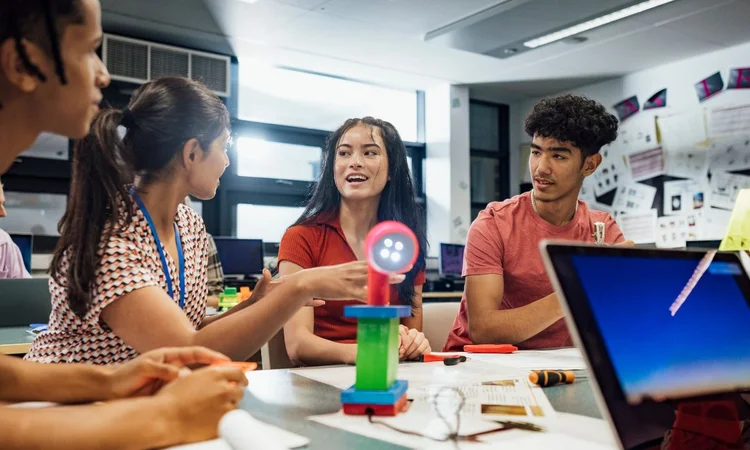
Traditional education methods often rely on passive learning techniques, whereas digital learning integrates interactive and immersive technologies like virtual reality (VR), augmented reality (AR), and gamification. These innovations enhance engagement, comprehension, and retention, making education more effective.

For instance, VR simulations allow medical students in remote locations to practice surgeries in a virtual environment before working on real patients. Similarly, AI-powered chatbots provide instant feedback and tutoring, ensuring that learners receive the support they need in real-time. These advancements are not only beneficial for students but also for organizations that invest in corporate training and leadership development.

Empowering Women and Underserved Communities

One of the most profound impacts of digital learning is its role in empowering marginalized groups, particularly women and underserved communities. Cultural and social barriers often prevent women in certain regions from pursuing traditional education. Online learning provides them with the flexibility to study at their own pace, from the safety of their homes.

Nonprofit organizations and tech companies are collaborating to provide scholarships and mentorship programs specifically designed for women in STEM (science, technology, engineering, and mathematics). By breaking down barriers to entry, online learning is fostering a more diverse and inclusive global workforce.

Challenges and the Road Ahead

Despite its potential, digital learning is not without challenges. Limited internet access, lack of digital literacy, and concerns over content credibility remain significant hurdles. Additionally, the absence of hands-on experience in some disciplines may hinder the effectiveness of online education in certain fields.

To overcome these obstacles, businesses and policymakers must invest in infrastructure, expand broadband access, and develop high-quality digital curricula that blend theoretical knowledge with practical applications. Collaboration between governments, educational institutions, and tech companies will be essential in scaling digital learning initiatives to reach the most disadvantaged populations.

Conclusion

The global education gap remains a pressing challenge, but digital learning is proving to be a powerful solution. By making education more accessible, affordable, and tailored to workforce demands, it is transforming the way knowledge is acquired and applied. Businesses, educators, and policymakers must continue to invest in technology-driven learning solutions to ensure that education becomes a fundamental right rather than a privilege.

As industries evolve and the digital economy expands, embracing online learning is not just an option—it is a necessity. By leveraging innovation, we can create a world where quality education is within reach for everyone, regardless of location, gender, or socioeconomic background.


About the Author

Amanda
Amanda

Amanda Zhang writes about artificial intelligence applications and machine learning deployment, translating technical capabilities into business value. Their approach combines algorithm evaluation with use case analysis. They focus on how organizations successfully implement AI systems to solve real business problems. Their reporting highlights the gap between AI potential and practical deployment challenges. They frequently examine data requirements, model performance, and integration complexity. They are known for balanced coverage that respects both AI capabilities and current limitations. Their perspective is shaped by conversations with data scientists, ML engineers, and business stakeholders. They write about computer vision, natural language processing, and predictive analytics applications. They emphasize responsible AI development and ethical considerations. Their work helps business leaders make informed decisions about AI investments and implementation strategies.

Comments

Join the discussion and share your thoughts.

No comments yet. Be the first to comment.

Leave a Reply

Your email address will not be published.

Related Posts

Challenges and Opportunities in Scaling Adaptive Learning Technologies Globally

Challenges and Opportunities in Scaling Adaptive Learning Technologies Globally

Adaptive learning technologies are revolutionizing education and workforce training, offering a personalized approach to learning that adapts to individual needs. By leveraging artificial intelligence (AI) and machine learning, these technologies promise to transform how we acquire knowledge, improve skills, and address learning gaps. However, scaling these solutions on a global scale presents both significant challenges and exciting opportunities.

Posted on: by Rachel Kim
Accessible Education: Strategies for Supporting Students with Disabilities

Accessible Education: Strategies for Supporting Students with Disabilities

In an ideal educational system, every student is provided with the tools and resources they need to succeed, regardless of their challenges or disabilities. However, ensuring accessibility for students with disabilities remains a significant challenge in many educational institutions. Creating an inclusive learning environment requires not only compliance with regulations but also a shift in mindset, recognizing that every student deserves the opportunity to learn and thrive. In this article, we

Posted on: by David Park
How Cognitive Load Management Is Shaping Modern Education

How Cognitive Load Management Is Shaping Modern Education

In the rapidly evolving world of education, educators are constantly seeking new ways to improve learning outcomes. One of the key strategies gaining traction is cognitive load management. This concept revolves around optimizing how information is presented and processed in order to prevent cognitive overload, allowing learners to absorb and retain information more effectively. By integrating cognitive load management techniques into instructional design, modern education can be transformed to m

Education
A New Era of Learning: How Adaptive Education is Setting Students Up for Success

A New Era of Learning: How Adaptive Education is Setting Students Up for Success

In the rapidly evolving world of education, traditional one-size-fits-all approaches are being replaced with more personalized learning experiences. Adaptive education, powered by technology, is transforming the classroom by tailoring learning to each student's needs, strengths, and weaknesses. This innovative approach not only enhances the learning process but also ensures that students are set up for long-term success in both academic and real-world environments.

Education
The Intersection of Culture and Learning: Fostering a Holistic Education

The Intersection of Culture and Learning: Fostering a Holistic Education

In an increasingly interconnected world, education is no longer just about imparting knowledge. It’s about developing well-rounded individuals who understand and respect the diversity of cultures, beliefs, and perspectives that shape the world around them. The intersection of culture and learning plays a critical role in fostering a holistic education that prepares students for both personal success and global citizenship. In this article, we will explore how cultural awareness enhances the lear

Education
Unlocking Opportunities: How Micro-Credentials Are Reshaping Education

Unlocking Opportunities: How Micro-Credentials Are Reshaping Education

The traditional education system has long been the primary route for individuals to gain skills and qualifications. However, as the demand for practical, up-to-date knowledge continues to grow, there has been a shift towards more flexible and accessible forms of learning. One such innovation is micro-credentials . These small, focused qualifications are changing the way we think about education, offering a new way to gain specialized skills quickly and affordably.

Education
Creating Effective Hybrid Learning Environments: Strategies for Educators

Creating Effective Hybrid Learning Environments: Strategies for Educators

The evolution of education has seen a significant shift toward hybrid learning environments—combining traditional face-to-face instruction with online learning components. This model emerged out of necessity during the COVID-19 pandemic and has since proven to enhance educational accessibility and flexibility. However, creating an effective hybrid learning environment poses unique challenges for educators. This article explores key strategies to optimize hybrid learning experiences for students.

Education
EdTech Solutions for Remote Learning: Bridging the Gap in Education

EdTech Solutions for Remote Learning: Bridging the Gap in Education

The global shift to remote learning, accelerated by the COVID-19 pandemic, has highlighted both the challenges and opportunities presented by technology in education. As educators, students, and parents navigated this new landscape, the role of educational technology (EdTech) emerged as a pivotal factor in facilitating effective learning experiences. This article explores various EdTech solutions that bridge the gap in education, enabling equitable access to knowledge, fostering engagement, and

Education
Future of Education: Trends Shaping Online Learning Platforms in 2025

Future of Education: Trends Shaping Online Learning Platforms in 2025

The landscape of education is evolving at an unprecedented pace, especially in the wake of the global pandemic that accelerated the adoption of online learning. As we look toward 2025, several key trends are emerging that will shape the future of online learning platforms. This article explores these trends and how they are expected to influence educational practices, student experiences, and the overall effectiveness of online education.

Education
From Theory to Practice: The Benefits of Skill-Based Education

From Theory to Practice: The Benefits of Skill-Based Education

The traditional approach to education, largely centered around theoretical knowledge and academic instruction, is gradually evolving to meet the demands of the modern workforce. Today, employers are seeking individuals who can apply their knowledge to real-world scenarios, emphasizing the importance of practical skills. Skill-based education, which focuses on hands-on learning and competency development, is gaining momentum as a transformative model for both students and professionals. In this a

Education