

The Auto Industry at a Defining Technological Crossroad
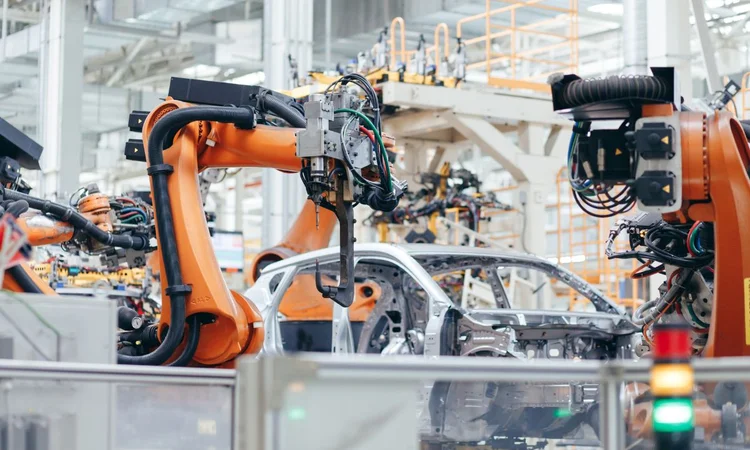
Automotive manufacturing has entered one of the most transformative periods in its history. By 2026, the industry is no longer driven solely by mechanical engineering and mass production efficiency. Instead, it is shaped by electrification, artificial intelligence, robotics, and digital intelligence embedded across every stage of manufacturing. The factory floors that once echoed with repetitive mechanical motion are now intelligent ecosystems where machines think, learn, and adapt.
This transformation is not optional. Shifting consumer expectations, global climate goals, supply chain disruptions, and intense competition have forced automakers to reinvent how vehicles are built. EVs, AI-driven assembly, and advanced robotics are no longer emerging trends—they are the new foundation of automotive manufacturing.
Electric Vehicles Reshape the Manufacturing Blueprint
Electric vehicles have fundamentally changed how cars are designed and produced. Unlike internal combustion vehicles, EVs rely on simpler mechanical architectures but far more complex electrical and software systems. In 2026, automotive factories are being reconfigured from the ground up to support this shift.
EV manufacturing emphasizes battery integration, power electronics, and lightweight materials rather than engines and transmissions. Production lines are becoming more modular to accommodate rapid model updates and evolving battery technologies. This shift has reduced some traditional manufacturing steps while introducing new ones that demand higher precision and safety standards.
Battery Manufacturing Becomes the Core of the Factory
In the EV era, batteries are no longer just components—they are the heart of the vehicle and the centerpiece of manufacturing strategy. By 2026, many automakers are vertically integrating battery production into their manufacturing ecosystems to reduce dependency and control quality.
Battery manufacturing requires extremely controlled environments, advanced automation, and continuous monitoring. Factories now operate clean rooms, automated cell assembly lines, and intelligent quality inspection systems. The race to improve battery energy density, safety, and longevity has turned battery production into one of the most strategically critical aspects of automotive manufacturing.
AI Assembly Lines Redefine Precision and Speed
Artificial intelligence has become the intelligence layer powering modern automotive assembly lines. In 2026, AI systems coordinate thousands of processes simultaneously, ensuring each vehicle is assembled with microscopic precision. These systems continuously analyze data from sensors, cameras, and machines to optimize workflows in real time.
AI-driven assembly lines can detect anomalies before defects occur, automatically adjust torque, alignment, and positioning, and ensure consistency across every unit produced. Assembly is no longer static; it is adaptive, learning from every vehicle built. This intelligence reduces rework, improves quality, and shortens production cycles.
Robotics Move Beyond Repetition
Robotics have been part of automotive manufacturing for decades, but their role has evolved dramatically. In 2026, robots are no longer limited to repetitive, pre-programmed tasks. Advanced robotics equipped with vision systems and AI now perform complex operations that require flexibility and judgment.
Robots handle battery installation, delicate electronic components, and interior assembly with precision that rivals human dexterity. Collaborative robots work safely alongside humans, adapting to movement and task changes in real time. Robotics have become partners rather than replacements, enhancing productivity while preserving human oversight.
Smart Factories Become Fully Connected Ecosystems
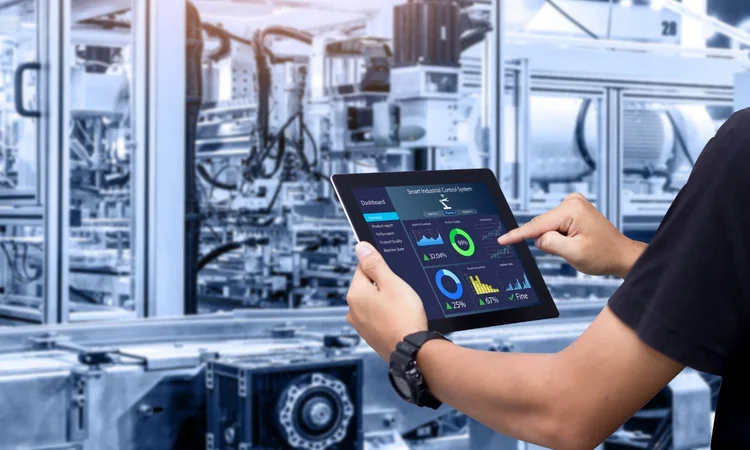
Automotive manufacturing facilities in 2026 operate as fully connected smart factories. Every machine, tool, and workstation is digitally linked, creating a continuous flow of information across the plant. This connectivity enables real-time decision-making and holistic optimization.
Production schedules adjust dynamically based on supply availability and demand forecasts. Energy usage is monitored and optimized automatically. Smart factories transform manufacturing from a linear process into an intelligent network that responds instantly to change.
Digital Twins Revolutionize Vehicle Production
Digital twin technology has become a cornerstone of automotive manufacturing innovation. A digital twin is a virtual replica of a physical factory, production line, or even an individual vehicle. In 2026, automakers use digital twins to simulate manufacturing processes before implementing changes in the real world.
This capability reduces risk and accelerates innovation. Engineers can test new assembly methods, evaluate factory layouts, and optimize production flows without interrupting operations. Digital twins enable faster launches, fewer errors, and continuous improvement across manufacturing systems.
Software-Defined Vehicles Influence Assembly Design
Vehicles in 2026 are increasingly software-defined, with digital systems controlling performance, safety, and user experience. This shift has profound implications for manufacturing. Assembly lines must integrate hardware and software seamlessly, ensuring vehicles are digitally configured as precisely as they are physically assembled.
Factories now include software flashing, calibration, and validation as core assembly steps. AI systems verify that each vehicle’s digital architecture functions correctly before it leaves the factory. Manufacturing is no longer complete when the car is built—it is complete when the software is perfected.
Supply Chain Intelligence Supports Production Stability
Supply chain disruptions over recent years have reshaped automotive manufacturing priorities. In 2026, AI-driven supply chain intelligence is tightly integrated with factory operations. Manufacturers have real-time visibility into material availability, logistics, and supplier performance.
This intelligence allows factories to adjust production plans instantly when disruptions occur. Alternative components can be substituted, and schedules recalibrated without halting operations. Supply chain intelligence has become essential for maintaining production continuity in an increasingly volatile global environment.
Sustainability Embedded into Manufacturing Strategy

Sustainability is no longer a side initiative in automotive manufacturing. In 2026, it is embedded into factory design and operations. EV production already reduces tailpipe emissions, but manufacturers are now focusing on reducing the environmental footprint of production itself.
Smart factories optimize energy usage, integrate renewable power, and reduce waste through precision manufacturing. Lightweight materials and recyclable components are prioritized. Sustainability has become a performance metric alongside cost, quality, and speed.
Human Workers in the Age of Intelligent Automation
Despite rising automation, humans remain essential to automotive manufacturing. In 2026, workforce roles are evolving rather than disappearing. Workers increasingly oversee systems, analyze data, and manage exceptions rather than performing repetitive tasks.
Training and reskilling are central to this transition. Employees learn to work with AI systems, robotics, and digital tools. This shift improves safety, job satisfaction, and productivity. The modern automotive factory values human intelligence as much as machine efficiency.
Quality Control Transformed by Vision and AI
Quality assurance has undergone a radical transformation. In 2026, AI-powered vision systems inspect every component and assembly step with unparalleled accuracy. Cameras and sensors detect microscopic defects invisible to the human eye.
These systems provide instant feedback, allowing corrections to be made before defects propagate. Quality is monitored continuously rather than inspected at the end. This proactive approach reduces recalls, improves brand reputation, and ensures consistent excellence.
Faster Product Cycles Without Sacrificing Reliability
Consumer expectations for frequent model updates and new features have accelerated product cycles. In 2026, AI assembly and robotics allow automakers to introduce new models faster without compromising reliability.
Flexible production lines can switch between models with minimal downtime. Software updates enable feature enhancements without physical redesigns. Manufacturing agility has become a competitive advantage in a rapidly evolving market.
Regional Manufacturing and Localization Gain Importance
Geopolitical uncertainty and sustainability goals have renewed interest in localized manufacturing. In 2026, automakers are building regional production hubs supported by smart factory technologies. These facilities reduce transportation emissions, improve supply chain resilience, and respond more quickly to local demand.
Localization does not mean isolation. Global platforms and digital systems allow consistency across regions while enabling customization. Automotive manufacturing has become both global and local at the same time.
Challenges Facing Automotive Manufacturing in 2026
Despite remarkable progress, challenges remain. High capital investment, integration complexity, and cybersecurity risks require careful management. The pace of technological change demands constant adaptation and workforce development.
Balancing innovation with affordability is another critical challenge. Automakers must deliver advanced vehicles at competitive prices while absorbing the cost of transformation. Success depends on strategic planning and long-term vision.
A New Manufacturing Identity for the Auto Industry
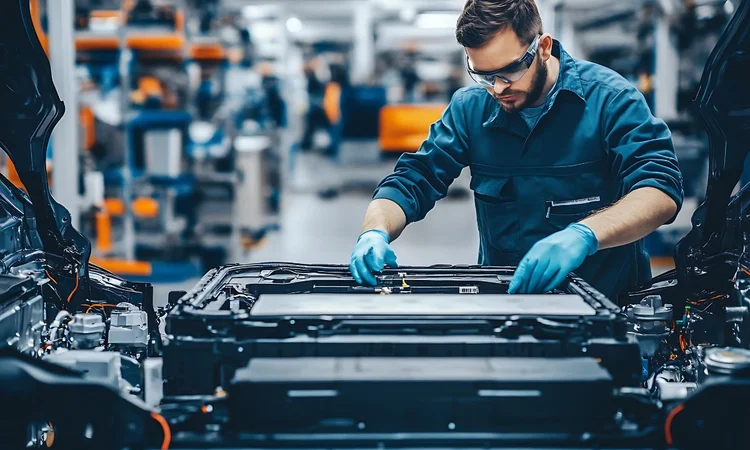
Automotive manufacturing in 2026 is no longer defined by assembly alone. It is defined by intelligence, adaptability, and sustainability. EVs have changed what vehicles are. AI and robotics have changed how they are built.
The industry is transitioning from mechanical production to digital orchestration. Factories are becoming intelligent systems capable of learning, optimizing, and evolving continuously. This transformation represents a new identity for automotive manufacturing.
Building the Vehicles of Tomorrow, Today
The cars produced in 2026 reflect the future of mobility. They are electric, software-driven, and increasingly autonomous. Behind every vehicle is a manufacturing ecosystem that combines EV technology, AI assembly, and advanced robotics.
Automotive manufacturing is no longer just about scale—it is about precision, speed, and responsibility. The factories shaping tomorrow’s mobility are smarter, cleaner, and more resilient than ever before.
The Road Ahead for Automotive Manufacturing
As the industry continues to evolve, EVs, AI assembly, and robotics will remain central to progress. The manufacturers who thrive will be those who embrace change, invest in intelligence, and align innovation with sustainability.
Automotive manufacturing in 2026 is not the end of a journey—it is the beginning of a new era. An era where technology, human expertise, and environmental responsibility converge to redefine how the world moves.







Leave a Reply
Your email address will not be published.