

Agriculture Enters Its Most Innovative Decade
Farming in 2026 looks radically different from what it was just a decade ago. Once defined primarily by physical labor and seasonal intuition, agriculture has evolved into a sophisticated blend of biology, engineering, and data science. The modern farm is no longer just a field—it is a connected ecosystem where drones scan crops from the sky, sensors listen to the soil, algorithms predict disease outbreaks, and farmers make decisions with near-scientific precision.
This transformation is not driven by novelty but by necessity. Climate instability, rising input costs, labor shortages, and growing global food demand have pushed agriculture to innovate faster than ever before. The result is a wave of farm innovations that are reshaping how food is grown, protected, and delivered. From aerial surveillance to advanced disease control systems, 2026 marks a defining moment in the evolution of global agriculture.
Drones in the Sky: The New Eyes of the Farm
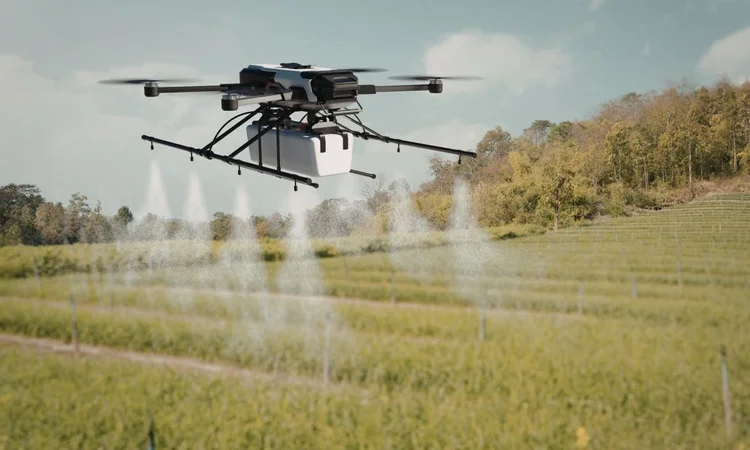
Drones have moved far beyond experimental status. In 2026, they are a routine part of farm operations across many regions. These flying tools provide farmers with a bird’s-eye view of their fields, capturing high-resolution imagery that reveals patterns invisible from the ground. Crop stress, irrigation issues, nutrient deficiencies, and pest damage can now be detected days or even weeks earlier than before.
What makes drones truly transformative is not just their ability to collect data, but how that data is interpreted. Advanced imaging combined with artificial intelligence allows farmers to pinpoint problem areas with extraordinary accuracy. Instead of treating an entire field uniformly, farmers can intervene only where needed, reducing costs and minimizing environmental impact. Drone technology has effectively turned crop monitoring from a reactive process into a proactive strategy.
Precision Spraying and the Rise of Targeted Intervention
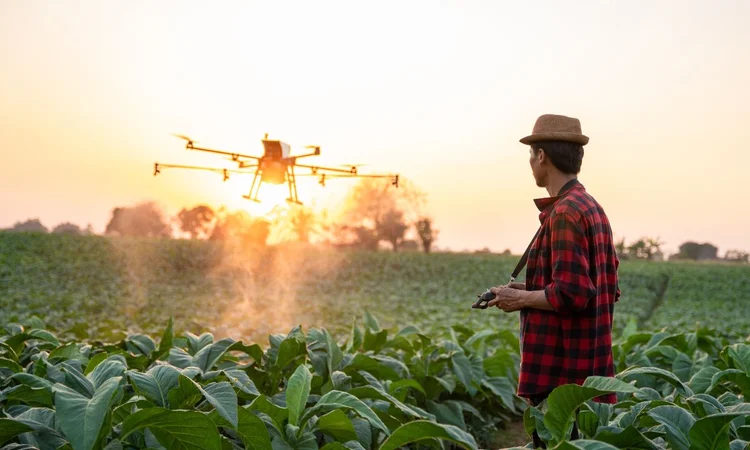
One of the most significant innovations driven by drone technology is precision spraying. In traditional farming, pesticides and fertilizers were often applied across entire fields as a precaution. In 2026, this approach is rapidly being replaced by targeted application systems guided by real-time data.
Drones equipped with spraying mechanisms can treat specific patches of crops affected by weeds, pests, or disease. This level of precision dramatically reduces chemical use while increasing effectiveness. Farmers are discovering that using less does not mean producing less. In fact, targeted intervention often leads to healthier crops and more balanced ecosystems. Precision spraying represents a shift toward smarter, cleaner, and more sustainable agriculture.
Disease Detection Before Damage Is Done
Crop diseases have always been one of the most unpredictable threats in farming. By the time visible symptoms appear, damage is often already widespread. Farm innovations in 2026 are changing this narrative through early disease detection powered by artificial intelligence.
Advanced imaging systems analyze subtle changes in plant color, texture, and growth patterns to identify disease stress at its earliest stages. These systems compare live field data against vast databases of known disease signatures, allowing farmers to act before infections spread. Early detection not only saves crops but also reduces the need for aggressive chemical treatments. Disease control is becoming preventative rather than curative, marking a major breakthrough in crop protection.
Smart Sensors Beneath the Soil Surface
While drones monitor crops from above, smart sensors are quietly transforming farming from below. Soil health has become a focal point of innovation in 2026, as farmers recognize that sustainable yields begin underground. Modern sensors measure moisture levels, temperature, nutrient content, and microbial activity in real time.
This continuous flow of information allows farmers to understand exactly how their soil is responding to weather, irrigation, and fertilization. Instead of relying on fixed schedules, farmers can now adjust inputs dynamically. This not only improves yields but also preserves soil structure and fertility for future seasons. Soil intelligence is turning farming into a precise science rather than a seasonal gamble.
Artificial Intelligence as the Farm’s Decision Engine
Artificial intelligence has emerged as the connective tissue linking all modern farm innovations. In 2026, AI systems no longer function as isolated tools. They operate as integrated decision engines that analyze data from drones, sensors, weather models, and historical records to guide farm management.
These systems help farmers determine optimal planting dates, predict yield outcomes, and assess risk scenarios. AI-driven disease models forecast outbreaks based on humidity, temperature, and crop stage, giving farmers a critical time advantage. The role of AI is not to replace human judgment, but to enhance it with insights that would be impossible to calculate manually. Farming decisions are becoming faster, smarter, and more confident.
Robotics and Automation Redefine Farm Labor
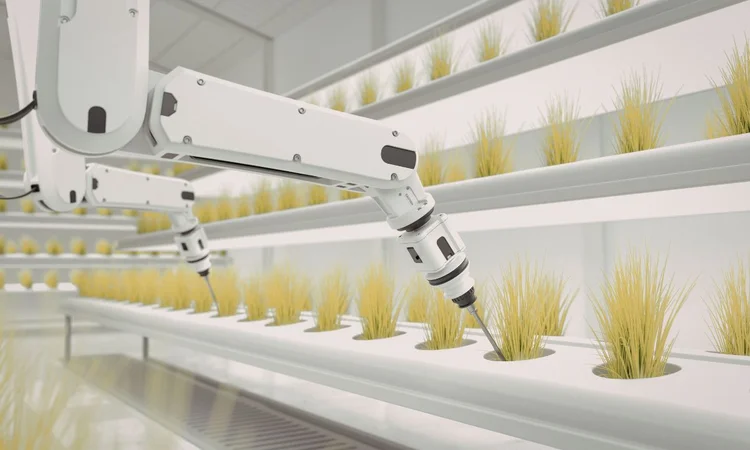
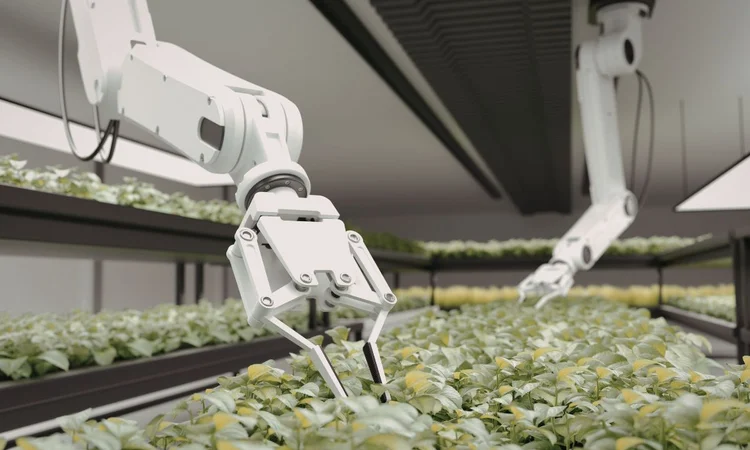
Labor shortages remain one of agriculture’s most pressing challenges, and automation has stepped in as a powerful solution. In 2026, robotic systems perform tasks that were once labor-intensive and time-sensitive. Autonomous tractors plant seeds with millimeter accuracy. Robotic weeders remove unwanted plants without disturbing crops. Automated harvesters operate with consistency even under challenging conditions.
These innovations are not eliminating the need for human workers, but they are redefining agricultural labor. Farmers and workers are increasingly managing systems, analyzing data, and overseeing operations rather than performing repetitive manual tasks. This shift is making farming more attractive to younger generations who value technology-driven careers.
Climate-Responsive Farming Takes Center Stage
Climate uncertainty has forced agriculture to become more adaptive, and farm innovations in 2026 reflect this urgency. Weather forecasting models integrated into farm platforms allow producers to anticipate extreme events and adjust practices accordingly. Irrigation systems respond automatically to rainfall predictions, conserving water during dry spells and preventing overwatering during wet periods.
Crop modeling tools help farmers select varieties best suited to changing conditions. Instead of planting based solely on tradition, farmers now rely on data-driven insights to diversify crops and spread risk. Climate-responsive farming is emerging as one of the most important trends of the decade, turning uncertainty into manageable risk.
Biosecurity and Disease Control Beyond Crops
Farm innovations in 2026 extend beyond crops to livestock health and biosecurity. Wearable devices track animal movement, temperature, and behavior, allowing early detection of illness or stress. AI systems analyze these patterns to flag potential disease outbreaks before they become widespread.
Improved disease control in livestock protects food supply chains and reduces economic losses. It also supports responsible antibiotic use by enabling targeted treatment instead of blanket medication. As concerns about zoonotic diseases and food safety continue to grow, these innovations are playing a vital role in protecting both animal and human health.
Digital Platforms Connect Farms to Markets
Innovation does not stop at production. In 2026, digital platforms are bridging the gap between farms and markets. Farmers use mobile applications to access real-time price data, connect with buyers, and plan harvests around demand rather than speculation. This visibility reduces waste and improves income stability.
Traceability systems integrated into these platforms allow consumers to learn where their food comes from and how it was produced. Transparency builds trust and opens access to premium markets. The digitalization of farm-to-market connections is turning agriculture into a more responsive and consumer-aligned industry.
Small Farms, Big Innovation
One of the most encouraging trends in 2026 is the increasing accessibility of farm innovations for small and mid-sized farms. Subscription-based software, shared drone services, and mobile-first advisory tools are lowering barriers to entry. Farmers no longer need massive capital investments to benefit from advanced technology.
This democratization of innovation is crucial for global food security. Small farms collectively produce a large portion of the world’s food, and empowering them with modern tools multiplies the impact of innovation. The future of agriculture depends not on a few high-tech farms, but on millions of connected, informed producers.
The Human Element in a High-Tech Farm
Despite all the technological advancements, farming in 2026 remains deeply human. Technology provides information, but farmers provide judgment, experience, and context. Successful innovation respects local knowledge and adapts to regional realities. The most effective systems are those designed with farmers, not just for them.
Education and training have become essential components of innovation adoption. As farmers gain confidence in using digital tools, trust grows, and the benefits compound. The agri-tech revolution is as much about people as it is about technology.
Challenges That Will Shape the Road Ahead
While innovation is accelerating, challenges remain. Data privacy concerns, interoperability issues, and uneven access to connectivity continue to slow adoption in some regions. Not all technologies deliver immediate returns, and farmers must navigate a crowded marketplace of solutions.
Addressing these challenges requires collaboration between technology providers, policymakers, researchers, and farmers. Long-term success depends on building systems that are affordable, transparent, and adaptable. Innovation must solve real problems, not create new ones.
A New Era of Farming Has Arrived
From drones mapping fields to AI systems preventing disease outbreaks, farm innovations in 2026 are transforming agriculture at every level. These technologies are not just improving efficiency; they are reshaping how humanity approaches food production in a changing world. Farming is becoming more precise, more resilient, and more sustainable.
The journey from drones to disease control represents more than technological progress—it represents a shift in mindset. Agriculture is no longer defined by uncertainty alone, but by informed decision-making and intelligent systems. As innovation continues to evolve, the farms of today are laying the foundation for a more food-secure tomorrow.









Leave a Reply
Your email address will not be published.