

On 1 October 2025, history was quietly rewritten. Elon Musk, already a household name, polarizing figure, and one of the most audacious entrepreneurs of our age, crossed a threshold no individual had before: a net worth of US$500 billion.
That extraordinary milestone prompts many questions: How did Musk amass such staggering wealth? What mechanisms and risks underlie his fortune? What does this say about modern capitalism, innovation, and wealth generation? In this article, we’ll journey through Musk’s path, from his early startups to electric cars, rockets, and AI, to understand exactly how he became the first person ever worth half a trillion dollars.
1. The Early Spark: From Zip2 to PayPal
Before Musk was launching rockets or building electric cars, he paid his dues in the world of software and internet ventures.
Zip2: In the late 1990s, Musk co-founded Zip2, a city guide software for newspapers. That startup was acquired by Compaq in 1999, netting Musk roughly $22 million.
X.com → PayPal: Musk then founded X.com, an online payments company, which later merged with Confinity and evolved into PayPal. When eBay bought PayPal in 2002, Musk pocketed a substantial sum, laying a financial foundation for future ventures.
These early successes provided capital, confidence, and a proof of concept: Musk could build startups that attracted attention and exit with value. But that was the beginning, not the climax.
2. Tesla: The Electric Car That Became a Colossus
[Source - Britannica]
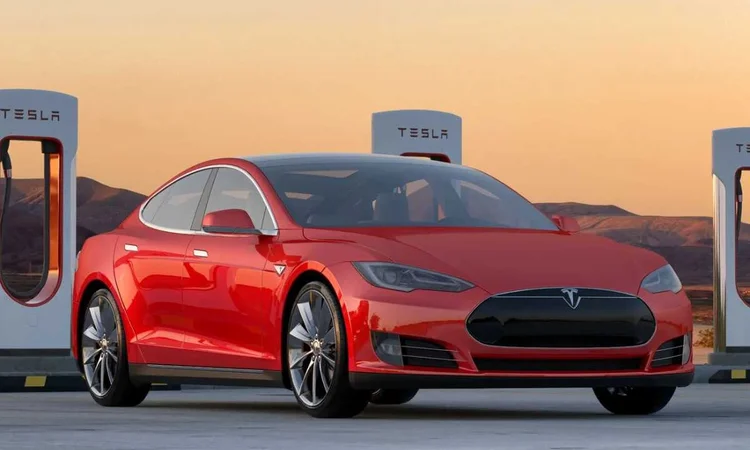
Tesla is not just the flagship of Musk’s wealth; it’s the engine behind it.
2.1. Entry Strategy & Early Challenges
Elon Musk joined Tesla (founded by others) in 2004 as an investor and board member, eventually becoming CEO and getting recognized as a cofounder in a settlement. In the early days, the challenge was formidable: electric cars were seen as a niche, infrastructure was lacking, manufacturing was capital-intensive, and investors were skeptical.
Yet Musk bet heavily, both financially and reputationally, on the promise of sustainable transport. The strategy entailed continuous innovation (battery tech, software), vertical integration (Gigafactories, energy storage), and bold marketing and vision.
2.2. The Rocket Ship: Tesla’s Ascent
Over time, Tesla’s valuation exploded. By 2025, the company’s market capitalization was estimated at over US$1.5 trillion. Musk holds roughly 12% of Tesla, making his stake worth about US$191 billion.
This stake is the backbone of Musk’s fortune, but it’s not all; other ventures amplify and diversify his wealth.
3. SpaceX, xAI & Diversification: Beyond Automobiles
Musk’s wealth is not monolithic; it is distributed across multiple high-growth, high-risk bets.
3.1. SpaceX: Rockets, Starlink & Private Space
SpaceX is arguably Musk’s most audacious venture. Founded in 2002, it designs and launches rockets, operates Starlink satellite internet, and contracts with institutions like NASA. Over time, SpaceX has become the most valuable private company in the world.
As of recent estimates, Musk owns around 42% of SpaceX. With a valuation of around US$400 billion in 2025, Musk’s share is potentially worth US$168 billion.
SpaceX’s growth is driven not just by launch services, but by developing reusable rockets, Starlink broadband, and ambitions to colonize Mars, ventures that capture investor imagination (and dollars).
3.2. xAI (and the X / Twitter Connection)
In 2025, Musk merged his AI interests with X (formerly Twitter) under xAI Holdings. The combined entity was valued at around US$113 billion, with Musk allegedly owning a ~53% stake (worth ~ US$60 billion).
Musk believes that AI is central to the future, and by owning a piece of the stack (communication platform + AI engine), he positions himself in a potent intersection of tech, data, and influence.
3.3. Other Bets: Neuralink, The Boring Company, etc.
Musk also founded or co-founded Neuralink (brain–computer interfaces) and The Boring Company (tunneling/transportation infrastructure). While these are smaller relative to Tesla & SpaceX, they embody Musk’s ambition to tackle multiple frontiers of technology.
These bets also serve as optionality; if one succeeds wildly, it could further propel Musk’s net worth. If one fails, the losses are relatively small compared to his core holdings.
4. Why No One Else Got Here First: Risks, Leverage, and Timing
Reaching US$500 billion is not just about having stakes in big companies; it requires a unique combination of leverage, timing, and risk tolerance.
4.1. Leverage via Equity, Not Cash
Unlike many super-rich individuals who convert a lot of their wealth into diversified portfolios of stocks, bonds, real estate, etc., Musk keeps enormous portions of his net worth locked in equity, especially in Tesla and SpaceX. This means his wealth is volatile, tied to market sentiment, company performance, and investor belief.
For example, a small swing in Tesla’s share price can shift Musk’s net worth by tens of billions in a day.
This “skin in the game” approach is risky, but also enables extreme upside.
4.2. Vision & Narrative
Investors, especially in tech, often buy stories as much as fundamentals. Musk’s narrative, colonizing Mars, building humanoid robots, and merging AI and social media, is compelling (even provocative). That helps attract capital and maintain high valuation multiples.
He frames his work not as profit-seeking, but as solving existential challenges (climate change, interplanetary survival). Whether you agree with that or not, the narrative distinguishes him from run-of-the-mill entrepreneurs.
4.3. Timing & Market Conditions
Getting to US$500 billion also depends on favorable macro conditions: risk-on markets, interest in growth tech, cheap capital, and speculative enthusiasm. Musk’s major gains came in years when tech valuations soared, interest rates were relatively low, and investors were hungry for moonshots (literally and figuratively).
Many contemporaries who might have similar ambitions lacked the time, scale, or positioning to benefit from that wave.
4.4. Regulatory, Market & Execution Risk
One wrong move, manufacturing failure, regulatory crackdown, funding shortfall, or misstep in AI could derail a dream. Musk’s path involved enormous execution risk. Yet, so far, his successes have outweighed missteps (at least in valuation). His willingness to double down distinguishes him.
5. The Milestone: Crossing US$500 Billion
[Source - Times Now]
5.1. The Moment & Its Mechanics
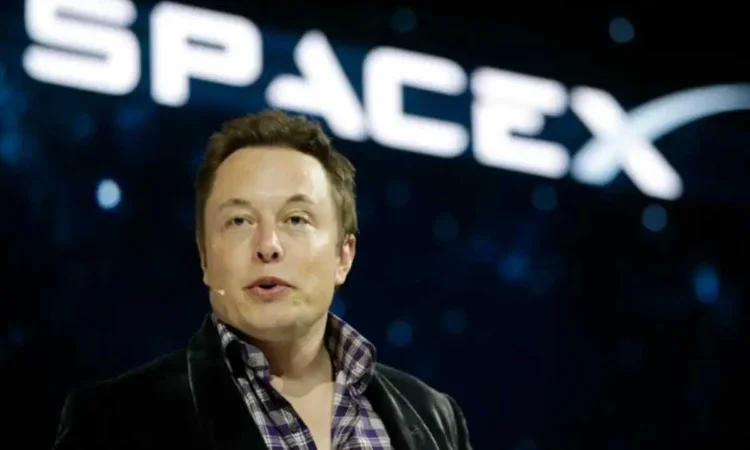
On 1 October 2025, as Tesla’s shares jumped ~4%, Musk’s net worth briefly tipped over US$500 billion (Forbes estimated US$500.1 billion).
That spike came from two main components:
Tesla equity: his ~12% stake rose in value with the share price.
Other holdings: SpaceX, xAI, and smaller bets all contributed incremental value.
It’s worth noting that such net worth valuations are estimates, based on public and private market multiples, tender offers in private firms, and assumptions about liquidity. So “US$500 billion” is a symbolic milestone as much as a precise figure.
5.2. What It Signals
Crossing half a trillion dollars makes Musk the first person ever to reach such a threshold.
It underscores:
The massive wealth potential in scalable, disruptive tech.
The role of equity appreciation (rather than salaries or passive investments) in extreme fortunes.
How modern capitalism allows a single individual, with the right bets and timing, to amass wealth rivaling the GDP of many countries.
6. Challenges, Critiques & Risks Ahead
While $500 billion is a milestone, it brings scrutiny and questions.
6.1. Value vs. Liquidity
Much of Musk’s wealth is on paper. Selling large chunks of Tesla or SpaceX shares would affect prices and invite regulatory, tax, or shareholder concerns. He’s often described as “cash poor” despite his immense net worth.
6.2. Governance & Incentive Structures
Tesla’s board recently proposed a staggering $1 trillion incentive package for Musk, tied to ambitious growth and valuation milestones. Critics warn that such packages may encourage overreach or misalignment with shareholders.
6.3. Volatility & Reversals
History has shown Musk’s net worth can drop dramatically. In late 2022, he recorded one of the largest single-person wealth losses ever. A downturn in tech, regulation, macro shocks, or missteps in execution could reverse gains.
6.4. Public Perception & Inequality Debate
A private individual amassing $500 billion raises ethical and political questions. Is the system rigged? Do we need wealth taxes? What does it say about the power dynamics in society? Critics argue that such extreme wealth is incompatible with a healthy democracy.
7. What Musk’s Milestone Means for the World
[ Source - SlideChef]
7.1. A Template for Modern Billionaires
Musk’s path is unlikely to be replicated by most, but it showcases what’s possible in an age where tech, AI, space, and connectivity converge.
7.2. Capital & Talent Flows Toward Moonshots
With high rewards for bold bets, more capital and talent may flow into frontier sectors: AI, biotech, space, and climate tech. Musk’s success amplifies the allure.
7.3. Pressure on Legacy Institutions
Automotive giants, aerospace agencies, and incumbents will feel pressure to innovate or risk disruption. Musk’s footprint forces them to reconsider their strategy.
7.4. The Narrative of Technological Faith
Behind the fortune is a belief: that humanity must push outward, into space, into AI, into sustainable systems. Musk’s wealth is not just an accumulation; it’s capital to fuel his vision. Whether one endorses that vision or not, it has a gravitational pull on markets, media, and policy.
8. Conclusions: The First of His Kind, For Now
Elon Musk’s ascent to a US$500 billion net worth is not merely a financial footnote; it’s a symbol of a new epoch in entrepreneurship. His journey fused high risk, high conviction, technological audacity, and narrative mastery.
While the figure is astonishing, what’s more fascinating is the architecture behind it: concentrated equity stakes, exponential sectors (EVs, AI, space), and relentless scale. Musk holds not a diversified portfolio garden, but a few gigantic, volatile pillars.
Whether this fortune endures, or whether someone else will surpass it, is an open question. But to say Musk is the first person ever worth half a trillion dollars is to capture a moment: the moment when human ambition, markets, and technology collided spectacularly.







Leave a Reply
Your email address will not be published.