

As we enter 2025, the global workforce is undergoing the most profound transformation since the Industrial Revolution, and at the center of this evolution stands artificial intelligence (AI). What began as an emerging technology used to automate repetitive tasks has quickly become a force shaping industries, redefining job roles, and restructuring how businesses operate at their core.
From AI-enabled workplaces to intelligent automation and predictive analytics, the future of work is more dynamic, interconnected, and digital than ever before. Organizations across the world, startups, multinational corporations, government institutions, and non-profits, are now rethinking their strategies to adapt to an AI-driven economy.
This article explores how AI is redefining global workforces in 2025, the opportunities and challenges it presents, and how organizations can prepare for an AI-powered future.
1. AI as the New Workforce Partner
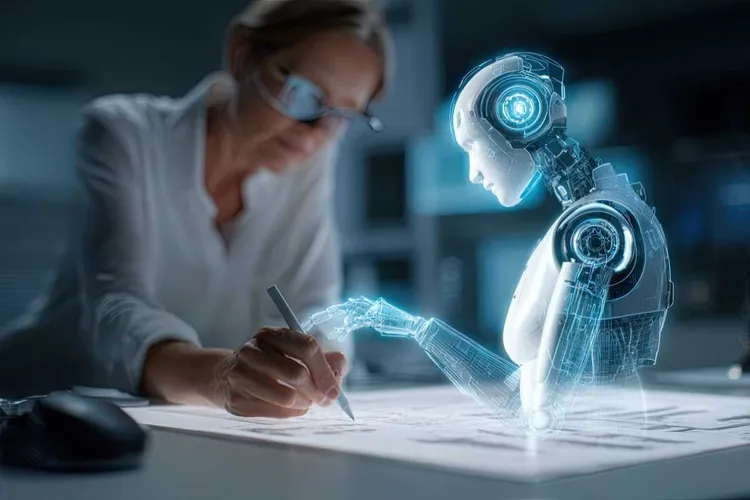
In 2025, AI is no longer perceived as a replacement for human jobs; it is increasingly viewed as a powerful partner that enhances productivity, optimizes workflows, and reduces operational inefficiencies.
From Automation to Collaboration
Earlier AI systems focused primarily on task automation, such as:
Data entry
Customer service
Inventory management
Basic analytics
Today’s AI goes beyond task execution. It collaborates with teams through:
Generative AI assistants that support research, content creation, coding, and strategic planning
Predictive tools that forecast business outcomes
Optimization engines that streamline supply chains, logistics, and workforce allocation
Instead of replacing workers, AI is helping teams work smarter by freeing professionals from manual or repetitive tasks, allowing them to focus on creativity, strategy, innovation, and relationship-building.
2. New Job Roles Are Emerging at Unprecedented Speed

AI has reshaped job markets globally. According to workforce reports in 2025, the fastest-growing job roles are deeply connected to AI, automation, and digital transformation. Many of these roles didn’t exist a decade ago.
Top Emerging AI-Driven Job Roles in 2025
Prompt Engineers – Specialists who design effective AI queries and workflows
AI Ethicists & Compliance Analysts – Ensure safe, transparent, and responsible AI use
Automation Architects – Integrate AI systems across business operations
Data Governance Managers – Manage data quality, privacy, and integrity
Digital Workforce Managers – Oversee the interaction between humans and AI agents
AI-Enhanced Customer Experience Designers – Use analytics and machine learning to improve user journeys
These roles reflect a shift toward hybrid skill sets, where technology, communication, creativity, and critical thinking converge.
3. Industries Experiencing the Most AI Transformation
AI is impacting every sector, but some industries are experiencing disruption at a much faster pace.
Healthcare
AI-powered diagnostics achieve accuracy levels surpassing traditional testing
Virtual health assistants manage patient communication
Robotics assists with surgeries, rehabilitation, and elder care
Finance and Banking
Fraud detection using real-time AI algorithms
AI-powered financial advisors offering tailored investment insights
Automation in underwriting, compliance, and customer support
Retail & E-commerce
Personalized shopping experiences driven by AI analytics
Autonomous warehouses
Smart inventory forecasting
Education
AI tutors supporting personalized learning
Automated grading and administrative tasks
Intelligent learning platforms predicting student challenges
Manufacturing
Predictive maintenance decreases downtime
Collaborative robots (“cobots”) perform precision tasks
AI-driven supply chain optimization
These transformations signify how AI is integrating deeply across systems, not just improving efficiency but shaping entirely new business models.
4. Hybrid Work and AI: Redefining Flexibility

The rise of remote and hybrid work, accelerated by the pandemic, has evolved significantly by 2025. AI now plays a central role in enabling productivity beyond traditional office settings.
Key Ways AI Supports Hybrid Work
Smart scheduling tools balance team availability across time zones
AI-driven performance analytics help managers identify strengths and gaps
Virtual collaboration assistants summarize meetings, generate action points, and organize tasks
Security AI monitors threats in remote environments
Hybrid work is no longer simply about location; it’s about efficiency, experience, and seamless digital integration.
5. The Skills Shift: What Professionals Need in 2025
AI has redefined the skill sets required to thrive in today’s workforce. While technical knowledge is increasingly valuable, soft skills are becoming just as essential.
Most In-Demand Skills in 2025
Technical Skills
AI and machine learning basics
Data literacy
Automation tools
Cybersecurity awareness
Digital project management
Soft Skills
Critical thinking
Emotional intelligence
Creativity and innovation
Problem-solving
Adaptability
As AI handles more routine tasks, uniquely human capabilities become the cornerstone of competitive advantage.
6. The Global Gig Economy: AI-Powered and Borderless
The gig economy has expanded significantly due to AI-driven platforms that connect talent to companies worldwide.
How AI Is Revolutionizing Freelancing
Intelligent platforms match freelancers with ideal projects
Automated contract management and payment systems reduce friction
AI-enhanced portfolios highlight a worker’s strengths through performance analytics
Workers in 2025 enjoy more autonomy, flexible work options, and global opportunities, while businesses gain access to on-demand talent with specialized skills.
7. Ethical AI and Workforce Equity
As AI becomes more powerful, its ethical implications grow. Transparency, fairness, and responsibility are at the heart of workforce discussions in 2025.
Key Ethical Concerns
Bias in AI systems is influencing hiring or promotion decisions
Data privacy risks with employee monitoring technologies
Algorithmic accountability for automated business decisions
Companies worldwide are now prioritizing ethical frameworks, mandatory audits, and governance policies to maintain trust and fairness.
8. Challenges of the AI-Driven Workforce
While AI brings enormous benefits, it also introduces challenges that organizations must navigate carefully.
The Most Significant Challenges in 2025
Workforce displacement in manual or repetitive job sectors
Upskilling gaps for older or under-trained employees
Cybersecurity vulnerabilities due to increased digital adoption
Overreliance on AI tools for decision-making
Increased mental fatigue due to digital overload
Forward-thinking companies are addressing these concerns through training programs, human-centered technology design, and balanced workforce strategies.
9. Preparing for the AI-Powered Workforce: What Businesses Must Do

To stay competitive, organizations must embrace AI strategically, not just implement it.
Invest in Workforce Reskilling and Upskilling: Training employees in AI literacy, data interpretation, cybersecurity, and digital collaboration is critical.
Adopt Responsible AI Frameworks: Ensure transparency, fairness, and compliance in all automated systems.
Build Hybrid Human-AI Teams: Integrate tools that complement employees’ strengths rather than replace them.
Reimagine Leadership: Leaders must understand digital tools, promote innovation, and foster a culture of continuous learning.
Strengthen Cybersecurity: AI adoption increases vulnerabilities; proactive security systems are a must.
Focus on Employee Well-being: Human-centered work design prevents burnout and improves productivity.
10. The Road Ahead: What the Workforce of 2030 Might Look Like
If 2025 is the year AI reshapes the workforce, 2030 may be the era it becomes fully embedded into everyday work.
Predicted Workforce Trends by 2030
AI copilots in every job role, similar to email today
Fully automated administrative tasks
AI-personalized career paths and training
The majority of global companies are adopting hybrid or distributed models
Growth of micro-entrepreneurs, solopreneurs, and digital nomads
Expansion of AI-driven global hiring beyond borders
The line between human capability and AI augmentation will continue to blur, but in a way that empowers workers to reach new levels of performance and creativity.
Conclusion: AI Is Not the Future, It Is the Present
Artificial intelligence is no longer a technology we anticipate; it is a transformative force actively reshaping how the world works. In 2025, AI stands at the intersection of innovation, efficiency, and human potential.
Rather than replacing jobs, AI is redefining them. It is giving birth to new roles, transforming industries, and unlocking opportunities for businesses and professionals worldwide.
The future of work belongs to those who embrace collaboration, with technology, with global teams, and with a mindset prepared for continuous evolution.
AI is not just changing how we work.
It is changing what we can become.








Leave a Reply
Your email address will not be published.