

The Invisible Engine Powering the Digital World
Semiconductors are the silent force behind modern civilization. They power smartphones, electric vehicles, data centers, medical devices, satellites, and virtually every digital system that defines life in 2026. While consumers rarely see chips directly, the global technology boom depends entirely on their performance, availability, and innovation.
By 2026, semiconductors will no longer merely be components; they will be strategic assets that shape economic growth, national security, and technological leadership. As demand for computing power explodes across industries, semiconductor innovation has become the backbone of the global tech ecosystem. The chips of today are not only smaller and faster, but they are also redefining what technology itself can achieve.
From Moore’s Law to a New Era of Chip Evolution
For decades, semiconductor progress followed Moore’s Law, with transistor density doubling roughly every two years. By 2026, the industry will have moved beyond relying solely on this principle. Physical limits have forced innovation to expand in new directions, from advanced architectures to novel materials and packaging techniques.
Chipmakers are now pursuing performance gains through smarter design rather than just smaller transistors. Specialized processors, energy-efficient architectures, and system-level optimization are driving progress. This shift marks the beginning of a new era where intelligence and efficiency matter as much as scale.
Advanced Nodes Push the Limits of Physics
Leading-edge semiconductor manufacturing in 2026 operates at astonishingly small scales. Advanced process nodes enable higher performance and lower power consumption, supporting everything from AI acceleration to mobile computing. Producing chips at these scales requires extreme precision, advanced lithography, and highly controlled environments.
These innovations have unlocked new levels of computational capability. High-performance chips now process massive workloads with greater efficiency, enabling real-time analytics, immersive digital experiences, and breakthroughs in scientific research. Advanced nodes remain a critical driver of the tech boom, even as complexity and cost continue to rise.
Specialized Chips Power the Age of Intelligence

General-purpose processors alone can no longer meet the demands of modern applications. In 2026, specialized chips designed for specific tasks have become essential. Artificial intelligence, machine learning, and data-intensive workloads rely on processors optimized for parallel computing and rapid data movement.
These specialized chips deliver dramatic performance improvements while consuming less energy. From AI accelerators to graphics processors and edge computing chips, specialization allows technology to scale intelligently. Semiconductor innovation has become more focused, tailored, and application-driven than ever before.
Semiconductors at the Heart of the AI Revolution
Artificial intelligence is one of the most powerful forces shaping technology in 2026, and semiconductors are its foundation. Training and deploying AI models requires enormous computational resources, and chip innovation determines how fast and efficiently this can be done.
New architectures are designed specifically for AI workloads, enabling faster inference and reduced energy consumption. These chips allow AI to move beyond data centers into everyday devices, from smartphones to industrial equipment. Semiconductor innovation is making intelligence more accessible, scalable, and practical across industries.
The Rise of Chiplets and Modular Design
One of the most important breakthroughs in semiconductor design is the adoption of chiplets. Instead of building a single monolithic chip, manufacturers now combine multiple smaller chips into a single package. This modular approach improves yield, flexibility, and performance.
In 2026, chiplet-based designs allow companies to mix and match components optimized for different tasks. This strategy reduces development time and enables faster innovation. Modular design represents a shift toward more adaptable and resilient semiconductor systems.
Advanced Packaging Unlocks New Performance
As transistor scaling becomes more challenging, advanced packaging has emerged as a critical innovation area. In 2026, packaging is no longer just about protecting chips, it is about enhancing performance. Techniques such as three-dimensional stacking and high-density interconnects allow chips to communicate faster and more efficiently.
Advanced packaging reduces latency and power consumption while increasing bandwidth. This is especially important for high-performance computing and AI applications. Semiconductor innovation now extends beyond the silicon itself to the way chips are assembled and integrated.
Energy Efficiency Becomes a Design Imperative
Energy efficiency has become one of the defining challenges in semiconductor innovation. As computing demand grows, managing power consumption is essential for sustainability and performance. In 2026, chip designers prioritize efficiency at every level, from architecture to manufacturing.
Low-power chips enable longer battery life in consumer devices and lower operating costs in data centers. Energy-efficient semiconductors support the expansion of digital infrastructure without overwhelming energy systems. Efficiency is no longer a trade-off; it is a core performance metric.
Semiconductors Enable the Electric Vehicle Revolution
Electric vehicles rely heavily on advanced semiconductors. Power management chips, sensors, and processors control everything from battery performance to autonomous driving features. In 2026, semiconductor innovation is accelerating the adoption and sophistication of electric mobility.
Automotive-grade chips are designed for reliability, safety, and performance under extreme conditions. As vehicles become more connected and intelligent, semiconductors play an increasingly central role. The tech boom in transportation would not be possible without advances in chip technology.
Chips Drive the Expansion of Data Centers and Cloud Computing

The growth of cloud computing and data centers continues to reshape the digital economy. In 2026, data centers consume vast amounts of computing power, storage, and networking capacity. Semiconductor innovation determines how efficiently these systems operate.
High-performance processors, memory chips, and networking components enable faster data processing and lower latency. Innovations in chip design reduce energy usage and cooling requirements, supporting sustainable growth. The cloud revolution is powered by relentless semiconductor advancement.
Edge Computing Brings Intelligence Closer to Users
Edge computing has emerged as a key trend in 2026, moving data processing closer to where it is generated. This shift reduces latency and improves responsiveness for applications such as autonomous systems, industrial automation, and smart cities.
Semiconductors designed for edge environments balance performance with low power consumption. These chips enable real-time decision-making without relying solely on centralized data centers. Semiconductor innovation is expanding intelligence beyond the cloud into the physical world.
Supply Chain Resilience Shapes the Industry
Recent disruptions have reshaped how the semiconductor industry approaches supply chains. In 2026, resilience and diversification are strategic priorities. Companies are investing in regional manufacturing, advanced fabrication facilities, and long-term capacity planning.
Supply chain intelligence supported by data analytics helps manufacturers anticipate demand and mitigate risk. Semiconductor innovation now extends beyond technology to include manufacturing strategy and global coordination. A stable supply of chips is essential for sustaining the tech boom.
Geopolitics Elevates Semiconductors to Strategic Status
Semiconductors have become central to geopolitical discussions and national strategies. In 2026, governments recognize chips as critical infrastructure underpinning economic competitiveness and security. This has led to increased investment in domestic manufacturing and research.
The strategic importance of semiconductors has intensified global competition. Innovation, talent, and manufacturing capacity are now matters of national interest. The semiconductor industry sits at the intersection of technology, policy, and global power dynamics.
Sustainability Gains Momentum in Chip Manufacturing
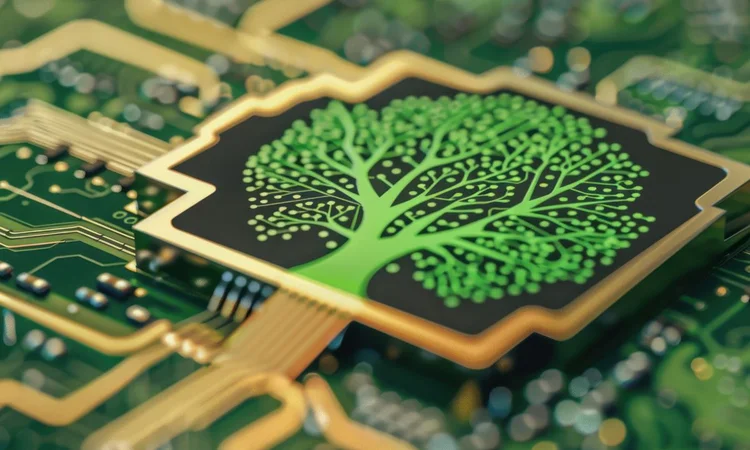
Semiconductor manufacturing is resource-intensive, and sustainability has become a growing focus in 2026. Chipmakers are investing in energy-efficient processes, water recycling, and waste reduction. Sustainable manufacturing practices are increasingly integrated into facility design.
These efforts support environmental responsibility while improving operational efficiency. As demand for chips continues to rise, sustainable manufacturing ensures that growth does not come at the expense of the planet. Innovation now includes how chips are made, not just how they perform.
Workforce Evolution in a High-Tech Industry
The semiconductor industry requires a highly skilled workforce capable of operating at the frontier of science and engineering. In 2026, demand for talent spans materials science, software, automation, and data analytics.
Companies are investing in education, training, and collaboration to build future-ready teams. Workforce development is critical for sustaining innovation. The human element remains central in an industry defined by precision and complexity.
Challenges Facing Semiconductor Innovation
Despite remarkable progress, the semiconductor industry faces significant challenges. Rising manufacturing costs, technical complexity, and talent shortages create pressure across the ecosystem. Balancing innovation with affordability remains an ongoing challenge.
Security concerns, intellectual property protection, and global competition add further complexity. Addressing these challenges requires collaboration across industry, academia, and governments. The future of semiconductor innovation depends on shared solutions and long-term vision.
Beyond Chips: Semiconductors as System Enablers
In 2026, semiconductors will no longer be viewed in isolation. They are part of integrated systems that combine hardware, software, and connectivity. Chips enable platforms rather than standalone devices, supporting ecosystems that drive innovation across sectors.
This system-level perspective allows technology to scale more efficiently and adapt to changing needs. Semiconductors have become enablers of entire digital experiences, from smart homes to global communication networks.
The Semiconductor Industry Shapes the Future of Technology
The tech boom of 2026 is built on silicon foundations. Every major technological advancement, from artificial intelligence and electric vehicles to cloud computing and smart infrastructure, depends on semiconductor innovation. Chips determine the speed, efficiency, and feasibility of progress.
As technology continues to evolve, the role of semiconductors will become increasingly critical. Innovation in chip design, manufacturing, and integration will define what is possible in the digital age.
A World Powered by Silicon Intelligence
Semiconductors may be invisible to most people, but their impact is profound. In 2026, they are the engines driving economic growth, digital transformation, and technological ambition. Chips and the innovations surrounding them have moved beyond components to become the foundation of modern life.
The future of technology is being etched in silicon today. As semiconductor innovation continues to accelerate, it will shape industries, societies, and possibilities far beyond what we can currently imagine. The tech boom of 2026 is not just powered by software and ideas; it is powered by chips and everything beyond them.










Leave a Reply
Your email address will not be published.